



What's Happening?
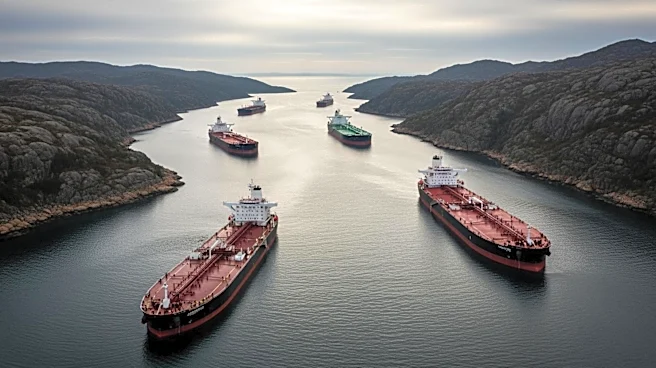
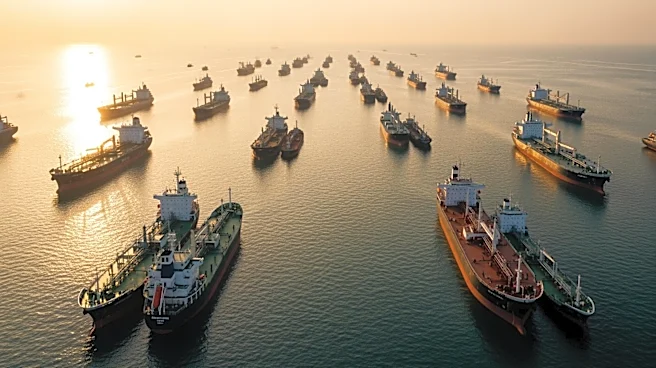
Shipping traffic in the Strait of Hormuz has come to a near standstill despite a ceasefire between the U.S. and Iran. Iran has implemented a 'tollbooth' system, requiring ships to secure permission and potentially pay fees to transit the strait. This
system has raised legal questions, as Iran has not ratified the United Nations Convention on the Law of the Sea, which guarantees the right to transit passage. The situation has led to confusion and uncertainty among shipping companies, with some vessels turning off or spoofing their GPS trackers during transit. The current traffic is significantly reduced compared to the prewar average of over 100 vessels daily. European leaders and U.S. allies have expressed opposition to any tolls or restrictions on this critical shipping route.
Why It's Important?
The Strait of Hormuz is a vital shipping route for global energy supplies, and any restrictions or tolls could have significant economic implications. The uncertainty surrounding Iran's toll system has already contributed to rising oil prices, which exceeded $100 a barrel. The situation poses a risk to international trade and could lead to increased costs for shipping companies and consumers. Additionally, the legal ambiguity of Iran's actions could set a dangerous precedent for maritime law and freedom of navigation. The ongoing standstill affects not only the shipping industry but also the economies of Gulf countries that rely heavily on energy exports.
What's Next?
The international community is closely monitoring the situation, with European Union partners finalizing plans to set up a mission to escort ships through the strait. However, it remains unclear how this mission will interact with Iran's stance. The U.S. and Iran may explore a joint venture to charge tolls, but this proposal faces opposition from European leaders and Gulf allies. The shipping industry is awaiting technical details from both the U.S. and Iran on how to safely transit the strait. The resolution of this issue will require diplomatic negotiations and potentially broader international agreements.
Beyond the Headlines
The situation in the Strait of Hormuz highlights the complex interplay between international law, regional politics, and global trade. Iran's actions challenge established norms of maritime navigation and could lead to long-term shifts in how shipping routes are managed. The legal questions surrounding Iran's toll system underscore the need for clear international agreements to prevent similar situations in the future. Additionally, the reliance on energy imports from the region emphasizes the importance of stable and open shipping routes for global economic stability.