




What's Happening?
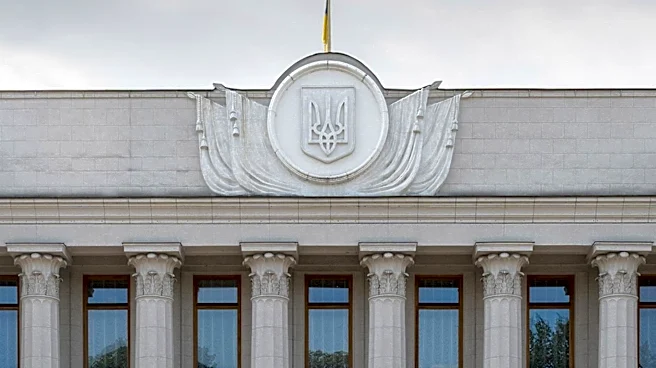
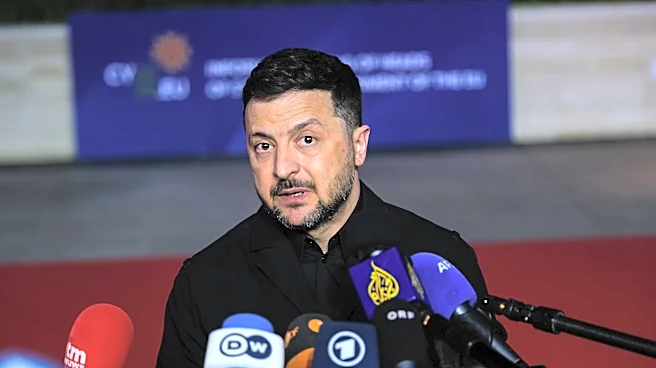
The Ukrainian government is actively developing and implementing new strategies to bolster its industrial sector, focusing on critical areas such as lending, war risk insurance, energy supply, and streamlined export logistics. Prime Minister Serhii Koretskyi
recently convened a meeting with representatives from various industrial sectors, including mechanical engineering, steel, and defense, to discuss these initiatives. A key topic was the proposed war risk insurance fund, slated for launch in 2027, and its potential funding sources. The government is also addressing limited access to loans for businesses outside the existing '5-7-9%' program, with the Ministry of Economy tasked to facilitate a new lending program offering up to UAH 1 billion with a 5.5% interest rate compensation. Furthermore, efforts are underway to ensure stable industrial operations despite electricity shortages, with the Ministry of Energy working on mechanisms for enterprises utilizing electricity imports or their own generation. The Ministry for Development of Communities and Territories has been instructed to explore allowing private locomotives on Ukrainian Railways tracks and simplifying cargo inspections at border checkpoints. Negotiations with the EU are also being intensified to increase quotas for Ukrainian steel products and address the Carbon Border Adjustment Mechanism (CBAM).
Why It's Important?
These governmental initiatives are crucial for the resilience and recovery of Ukraine's industrial base, which has been severely impacted by ongoing conflict and infrastructure damage. By addressing critical issues like war risk insurance, the government aims to mitigate financial uncertainties for businesses, encouraging investment and sustained operations in a high-risk environment. Improved access to credit, particularly for small and medium-sized enterprises, is vital for capital expenditure, innovation, and job creation, fostering economic stability. The focus on energy supply stability is paramount, as consistent power is fundamental for industrial production, especially given the widespread damage to energy infrastructure. Streamlining export logistics and negotiating favorable trade terms with the EU are essential for maintaining international trade flows, generating foreign currency, and integrating Ukraine further into global markets. These measures collectively aim to prevent further economic decline, support livelihoods, and lay the groundwork for post-conflict reconstruction, demonstrating the government's commitment to sustaining its economy under duress.
What's Next?
The proposed war risk insurance fund is scheduled for launch in 2027, with ongoing discussions regarding its funding. The Ministry of Economy is expected to hold a separate meeting with state-owned banks to expedite the new lending program for businesses. The Ministry for Development of Communities and Territories will continue to explore the feasibility of private locomotives on Ukrainian Railways and work towards simplifying cargo inspections. Negotiations with the EU regarding steel quotas and CBAM will proceed. The government has also confirmed that 'Made in Ukraine' policy programs will continue in 2027, with funding allocated in the upcoming state budget. These steps indicate a sustained effort to implement the outlined support mechanisms, with their effectiveness and impact on the Ukrainian industrial sector to be observed in the coming months and years.
Beyond the Headlines
The Ukrainian government's comprehensive approach to supporting its industry reflects a broader strategy of economic resilience and adaptation in wartime. Beyond immediate financial and logistical aid, these measures signal a long-term vision for Ukraine's economic future, emphasizing self-sufficiency and integration with European markets. The exploration of private locomotives on state railway tracks, for instance, could represent a significant shift towards liberalizing key infrastructure, potentially increasing efficiency and reducing bottlenecks in supply chains. The focus on 'Made in Ukraine' policies also highlights a commitment to fostering domestic production and reducing reliance on imports, which could have profound implications for national security and economic sovereignty. These initiatives, while born out of necessity, could catalyze fundamental reforms and modernization within Ukraine's industrial and economic landscape, shaping its post-war trajectory and its role in the global economy.