

What's Happening?
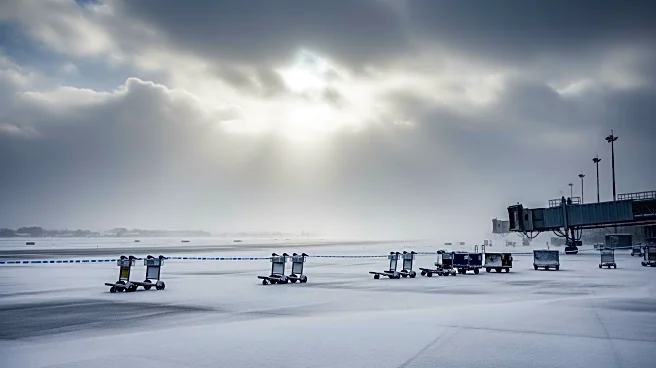
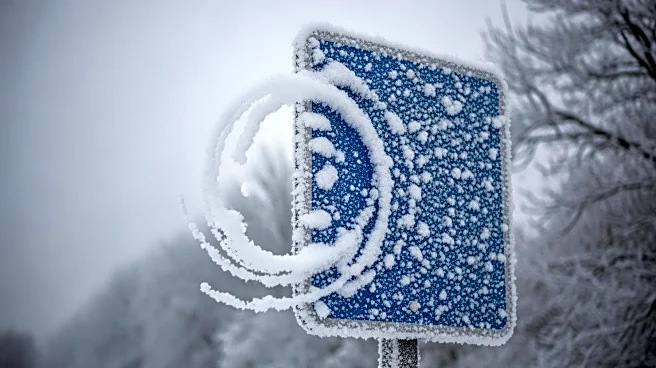
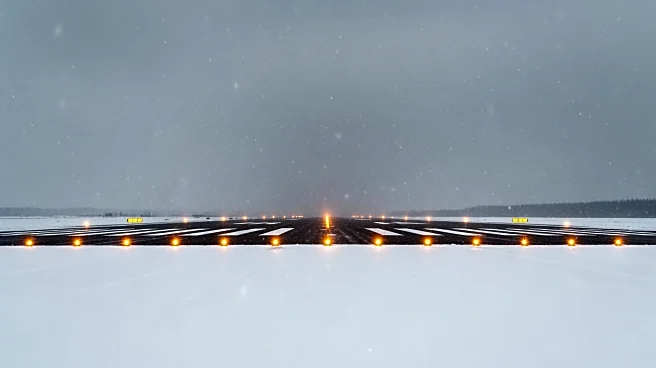
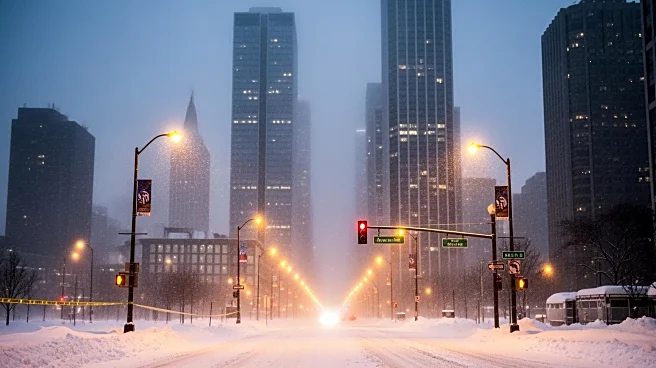
A severe blizzard, named Winter Storm Hernando, has caused significant disruptions in the northeastern United States, leading to the cancellation of over 5,600 flights by February 23, 2026. The storm, which began on February 22, brought heavy snowfall
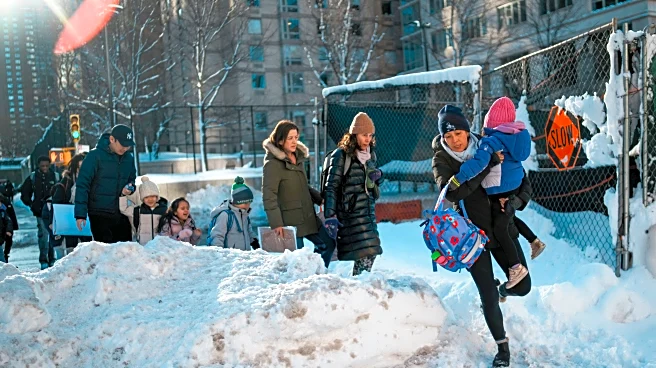
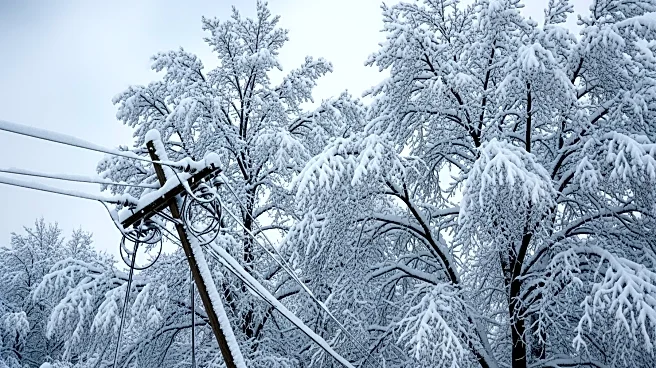
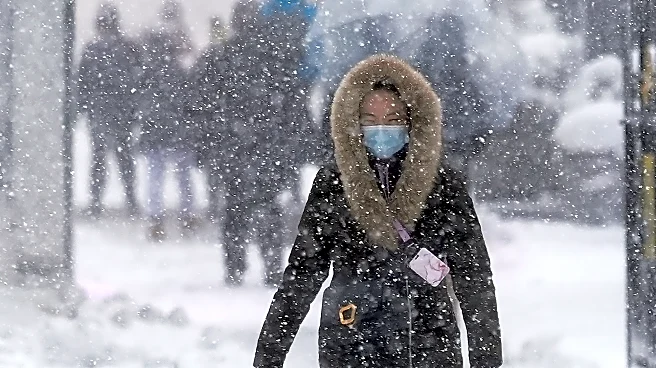
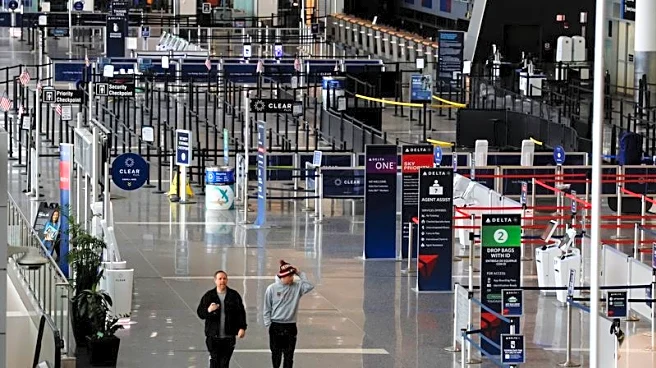
and high winds, prompting airlines like JetBlue, Delta, American, and United to suspend operations at major airports including New York JFK, Boston Logan, and others. The National Weather Service issued blizzard warnings across several states, and a state of emergency was declared in areas such as Connecticut, Massachusetts, and New York. The storm is expected to be one of the top 10 worst winter storms in New York City's history, with snow accumulations reaching up to two feet in some areas.
Why It's Important?
The flight cancellations and airport closures have significant implications for the airline industry, which is already facing operational challenges due to previous winter storms. The disruptions affect not only passengers but also the airlines' financial performance, as seen with American Airlines estimating a revenue impact of $150 million to $200 million from a previous storm. The blizzard also highlights the vulnerability of transportation infrastructure to severe weather events, which can have cascading effects on travel plans, supply chains, and economic activities in the affected regions.
What's Next?
Airlines are working to resume operations as weather conditions improve, with some expecting to restart flights by February 24. However, the ongoing partial government shutdown affecting the Department of Homeland Security could lead to further disruptions, particularly with airport security processes. The situation underscores the need for airlines and government agencies to enhance their preparedness and response strategies for extreme weather events to minimize future disruptions.