




What's Happening?
Russia, Azerbaijan, and Iran are in the advanced planning stages for a natural gas swap arrangement aimed at resolving Iran's seasonal winter gas deficit in its northern provinces. Russia's Energy Minister, Sergey Tsivilev, confirmed that this project
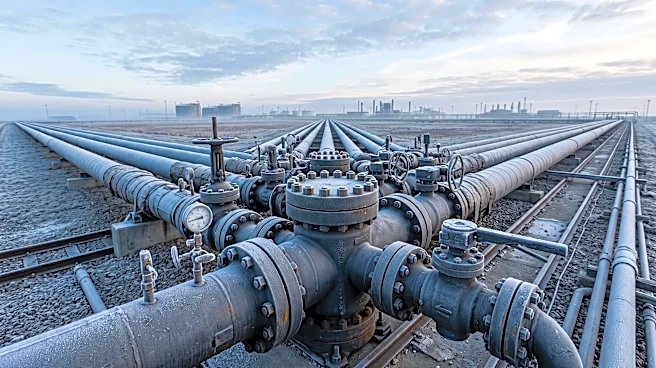
has been discussed at the ministerial level, with Gazprom overseeing the technical implementation. The immediate goal is to address a significant shortfall in Iran's northern regions during winter, which can reach up to 300 million cubic meters per day, primarily due to logistical and infrastructure challenges in transporting gas from its southern production hubs. The proposed mechanism involves Russia transferring approximately 2 billion cubic meters of gas annually to Iran's northern provinces. In return, Iran will redirect equivalent gas volumes from its southern South Pars field to export markets, including Turkey and Iraq, with Pakistan as a potential future customer.
Why It's Important?
This gas swap arrangement is significant for regional energy security and geopolitical dynamics. For the U.S., this development highlights the complex energy landscape in the Middle East and Eurasia, where Russia continues to exert influence through energy deals. While the U.S. aims to reduce reliance on Russian energy globally, this agreement demonstrates Russia's strategic efforts to diversify its market access and strengthen economic ties in the Southern energy markets, independent of Western financial and transportation infrastructures. The deal allows Iran to optimize its domestic gas supply and leverage its export capacity more effectively, potentially impacting global gas markets and U.S. sanctions policies if it facilitates increased Iranian gas exports. The long-term potential for up to 55 billion cubic meters per year over 30 years, though requiring substantial infrastructure development, underscores the strategic depth of this energy partnership.
What's Next?
The current focus is on implementing the initial 2 billion cubic meter annual swap. Future developments will depend on the progress of infrastructure expansion, as the existing transit capacity through Azerbaijan is approximately 10 billion cubic meters annually, far short of the 55 billion cubic meter long-term target outlined in the memorandum between Gazprom and Iran's National Gas Company. This will necessitate significant investment and construction. The success of this initial phase could pave the way for further integration of Russian, Azerbaijani, and Iranian energy networks, potentially solidifying a new energy corridor that could have lasting implications for regional energy trade and U.S. foreign policy in the region. Monitoring the infrastructure development and the actual volumes of gas swapped will be crucial.
Beyond the Headlines
This gas swap arrangement transcends a simple commercial transaction; it represents a strategic alignment among Russia, Azerbaijan, and Iran. For Russia, it offers a pathway to new markets and strengthens its position in the Middle East, circumventing Western sanctions and influence. For Iran, it addresses a critical domestic energy need while freeing up its own gas for export, enhancing its economic leverage. The deal also underscores the limitations of sanctions in completely isolating nations, as alternative trade routes and partnerships emerge. The long-term vision of a 55 billion cubic meter annual transfer suggests a profound shift in regional energy architecture, potentially creating a more integrated and interdependent energy bloc that operates outside traditional Western-dominated systems, posing a complex challenge for U.S. diplomatic and economic strategies.