





What's Happening?
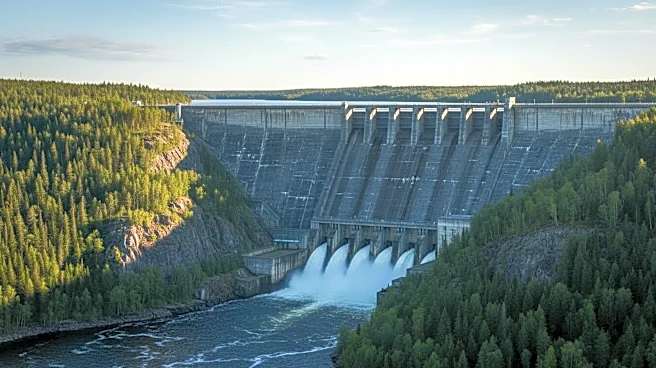
Brookfield Renewable, the owner of the Ripogenus Dam on the Penobscot River, is facing increased scrutiny and calls for greater oversight following a turbine shutdown on July 27 that resulted in a catastrophic fish kill of juvenile landlocked salmon.
This incident, triggered by a broken transmission line cross-arm at McKay Station, follows a similar event in 2023. Brookfield is currently in the final stages of relicensing the Ripogenus Dam, located about 30 miles west of Millinocket. Local property owners and conservation groups have filed complaints with federal regulators, accusing Brookfield of poor maintenance and repeatedly disrupting water levels, which impacts the river's renowned fishing and whitewater rafting. Critics argue that the dam's current 30-year license, inherited by Brookfield, is inadequate for wildlife protection and lacks provisions for backup systems to mitigate dramatic water flow changes. Despite ongoing concerns, Brookfield has not received license violations.
Why It's Important?
This situation highlights a critical conflict between energy production and environmental conservation, particularly concerning hydropower operations in ecologically sensitive areas. The repeated fish kills and accusations of poor maintenance against Brookfield Renewable, a major energy provider, raise significant questions about corporate environmental responsibility and regulatory effectiveness. The relicensing process for the Ripogenus Dam is a pivotal moment, as it will determine the operational standards and environmental protections for the next 30 years. The outcome could set a precedent for how federal regulators balance energy needs with the preservation of natural resources, especially for state fish like the landlocked salmon and the economic impact of recreational activities like fishing and rafting. This case underscores the importance of robust environmental provisions in energy infrastructure licensing and the need for accountability from dam operators.
What's Next?
Brookfield Renewable's dam relicensing process is nearing its end, with the current license expiring in September. State and federal reviews are still pending, and the deadline for public comments to federal regulators is August 28. Following this, the Maine Department of Environmental Protection will conduct a water quality assessment, which could take up to a year to complete and will also include a public comment period. Conservation groups are advocating for stricter license provisions, including a dam keeper for faster response, consistent water flow, redundant transmission lines, and automatic backup systems to prevent future fish kills. Federal regulators have the authority to impose fines, recommend license amendments, or even halt dam operations in cases of egregious non-compliance. Brookfield has stated it is investing in transmission line maintenance, but the effectiveness of these measures will be closely watched.
Beyond the Headlines
The controversy surrounding the Ripogenus Dam extends beyond immediate environmental concerns, touching upon the broader ethical responsibilities of large corporations operating within natural ecosystems. The repeated incidents of fish kills, despite Brookfield's investments in maintenance, suggest a potential systemic issue in balancing profit motives with ecological stewardship. This case could ignite a wider debate on the true cost of 'green' energy, prompting a re-evaluation of hydropower's environmental footprint and the adequacy of current regulatory frameworks. It also highlights the power dynamics between multinational corporations and local communities, where the economic benefits of energy production must be weighed against the cultural and ecological value of natural landscapes. The outcome of this relicensing process could influence environmental policy and corporate accountability standards for renewable energy projects across the U.S., emphasizing the need for sustainable practices that genuinely protect biodiversity.