




What's Happening?
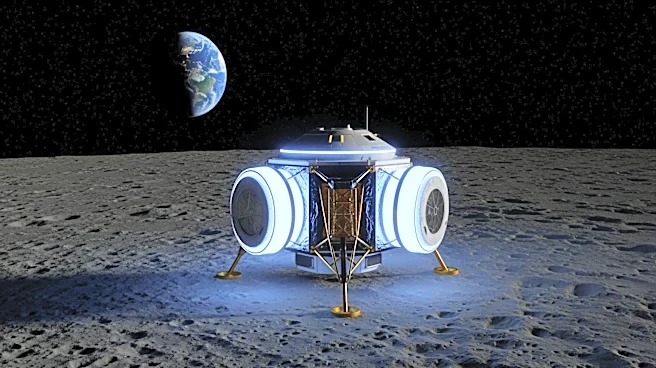
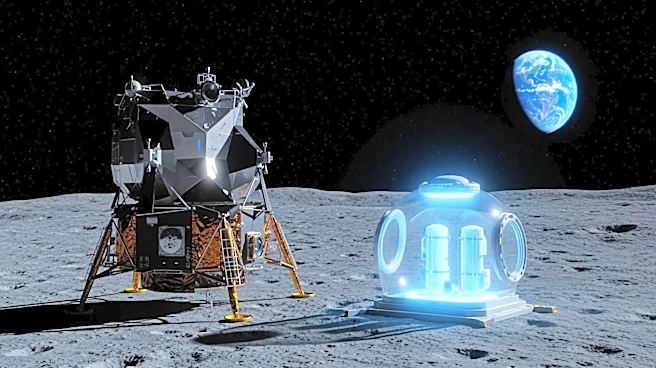
A team of researchers, including Frederick Moxley from STAR Laboratories and Anthony Ricciardi from McGill University, is advocating for the use of the moon as a secure biocontainment site for extraterrestrial samples, particularly from Mars. The proposal
suggests that the moon's naturally sterile and isolated environment could serve as a first line of biological defense against potentially harmful organisms to Earth's biosphere. This idea is detailed in a paper published in the journal Ambio. The researchers emphasize the need for rigorous biosafety standards as space exploration becomes more competitive, with both government agencies and private companies expanding missions beyond Earth. They argue that extraterrestrial materials should first be transported to a secure lunar-based quarantine and research facility rather than directly to Earth to prevent unpredictable ecological consequences.
Why It's Important?
The proposal highlights the growing concern over planetary protection as space exploration intensifies. The potential introduction of novel life forms to Earth's biosphere could have unpredictable and possibly devastating ecological impacts. The moon, with its isolation, offers a strategic location for studying extraterrestrial materials while safeguarding Earth's ecosystems. This approach could prevent scenarios where organisms mutate and pose invasion threats upon returning to Earth. The research underscores the importance of updating planetary protection strategies to keep pace with the risks associated with returning extraterrestrial samples, ensuring that space exploration does not inadvertently harm Earth's environment.
What's Next?
As international and commercial interest in space exploration grows, the implementation of a lunar biocontainment facility could become a critical component of future space missions. The researchers' proposal may influence how space agencies, like NASA and China's space program, plan their lunar bases and missions. The establishment of such a facility would require international cooperation and agreement on biosafety standards. The ongoing race to establish a presence on the moon could see this proposal integrated into broader lunar exploration strategies, potentially setting a precedent for how extraterrestrial samples are handled in the future.