






What's Happening?
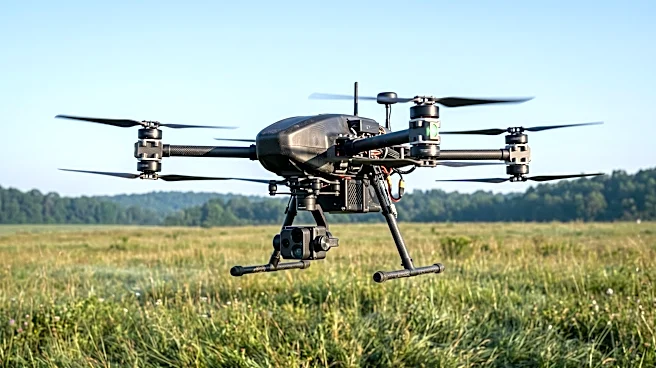
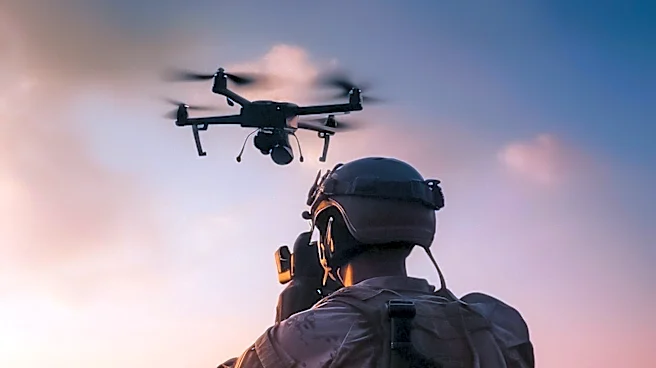
The U.S. military is being advised to proactively drive the technological evolution of drones by implementing a new testing methodology. This approach would involve setting specific drone-related problems and tasking multiple teams to produce several
generations of solutions within a short timeframe, such as four generations in twelve months. The threat environment would be deliberately altered every three months, introducing new challenges like interceptors, GPS jamming, or modified missions, some of which would be unexpected. The results of these tests would be provided to the teams, allowing them to adapt and iterate. This strategy aims to accelerate adaptation in drone technology, forcing rapid changes on the U.S. side to compel expensive responses from adversaries. Currently, military testing primarily focuses on meeting requirements or selecting the best existing system, rather than fostering rapid, deliberate evolution.
Why It's Important?
This proposed shift in drone testing is crucial for maintaining and advancing the U.S. military's technological edge in an era of rapidly evolving warfare. By deliberately accelerating drone adaptation, the U.S. can create a continuous cycle of innovation that could outpace adversaries. This strategy aims to identify and implement inexpensive adaptations that force opponents to invest heavily in countermeasures, thereby gaining a strategic advantage. The current pace of traditional weapons development, which often takes years or decades, is ill-suited for the rapid evolution seen in drone technology. Adopting a 'fruit fly' approach to drone development, characterized by short generations and rapid iteration, could allow the U.S. to dictate the terms of technological competition, influencing where adversaries allocate their resources in terms of engineering and manufacturing capacity. This could lead to a more agile and cost-effective defense posture.
What's Next?
The military could begin by implementing initial experiments involving tens or hundreds of drones per generation, focusing on demonstrating a credible path to larger-scale manufacturing. These experiments would also measure the time required for each stage of a generation, from design and prototyping to testing, manufacturing, contracting, delivery, and training. This comprehensive measurement would help identify bottlenecks in the overall adaptation process that need redesigning. The goal is to learn which technologies and teams consistently produce useful, scalable solutions as the operational environment shifts. The insights gained from these deliberate evolutionary cycles would then inform future procurement, development, and strategic planning for drone warfare, potentially leading to a more dynamic and responsive military industrial complex.
Beyond the Headlines
The concept of deliberately accelerating technological evolution in military hardware raises broader implications for defense innovation and resource allocation. It challenges the traditional, often slow, acquisition processes by advocating for a more agile, iterative development model. This approach could foster a culture of continuous improvement and rapid prototyping within the defense sector, potentially leading to more resilient and adaptable military capabilities. Furthermore, it highlights the ethical considerations of autonomous systems and the need for robust testing protocols to ensure reliability and safety in unpredictable combat environments. The shift from simply acquiring the 'best' system to cultivating the 'best process for adaptation' could fundamentally alter how the U.S. military approaches technological superiority, emphasizing dynamic evolution over static advantage.