
What's Happening?
Germany and Japan, following their devastation in World War II, have undergone significant transformations over the past eight decades, emerging as prosperous democracies internationally recognized for peace,
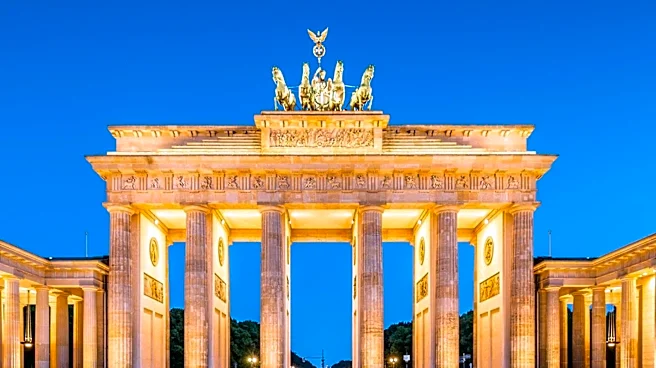
economic achievement, and multilateral cooperation. Both nations rebuilt their international influence not through territorial expansion, but through economic development, innovation, diplomacy, and cultural influence. Germany, in particular, transformed from a country morally, politically, and physically devastated by National Socialism into a stable democracy and a central pillar of European peace, marked by reconciliation with former enemies, European integration, and a strong culture of remembrance. Japan, similarly, developed a democratic society with a strong post-war commitment to peace after the destruction of Hiroshima and Nagasaki. These transformations demonstrate that nations are not perpetually defined by their darkest historical chapters and can learn, rebuild, reconcile, and change.
Why It's Important?
The post-war trajectories of Germany and Japan offer crucial insights into national transformation and the redefinition of international standing. Their experiences highlight that acknowledging a catastrophic past can be a catalyst for renewal rather than a source of permanent national humiliation. For the U.S. and its allies, these examples underscore the potential for former adversaries to become key partners in global peace and economic stability. The emphasis on economic development, diplomacy, and cultural influence over military power provides a model for nations seeking to rebuild or redefine their global roles. This historical perspective is particularly relevant in contemporary international relations, suggesting that even in the aftermath of conflict, a path towards reconciliation, democratic values, and peaceful cooperation is achievable, benefiting global security and economic interconnectedness.
What's Next?
The lessons from Germany and Japan's post-war transformations are presented as a potential framework for other nations, particularly in the context of future reconciliation and rebuilding efforts. The article suggests that a path forward could involve historical honesty, opening archives, protecting independent scholarship, and allowing future generations to understand past conflicts. This would necessitate reconciliation with affected nations and the rebuilding of institutions to prevent concentrated decision-making that could lead to future conflicts. The broader implication is a redefinition of 'great power' status, moving beyond military strength to emphasize contributions to literature, science, culture, and intellectual life. This approach could foster a more stable and cooperative international environment, encouraging nations to measure their greatness by global contributions rather than territorial control.
Beyond the Headlines
The transformations of Germany and Japan delve into the profound ethical and cultural dimensions of national identity and historical responsibility. Both nations did not erase their histories but confronted them, turning remembrance into a source of democratic strength. This process involved a societal commitment to democratic values, historical education, and an exceptional culture of remembrance. The less obvious implication is the critical role of institutional strength and civil society in preventing catastrophic decisions. The article posits that the decisive preparation for war often begins when institutions capable of questioning political power gradually lose their ability to make disagreement consequential. This highlights the long-term societal shifts required to build resilient democracies that can resist concentrated power and prevent individual ambitions from leading to national catastrophes, emphasizing the continuous need for independent media, organized civil society, and accountable governance.