






What's Happening?
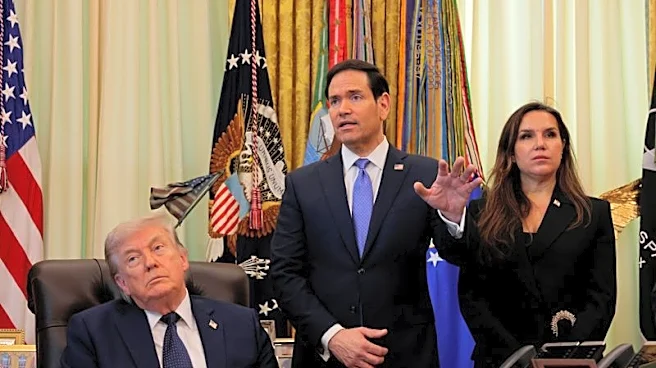
Israel and the United States are set to begin official discussions on a new framework for American defense aid, as the current agreement is due to expire in 2028. The talks, led by Israeli Defense Ministry Director-General Amir Baram and U.S. Secretary
of State Marco Rubio, aim to establish a model for security assistance from 2029 to 2038. The existing framework, signed in 2016, provides Israel with $38 billion over a decade, primarily for purchasing U.S. weapons systems. The new agreement is expected to gradually reduce U.S. financial assistance, with a complete phaseout by 2038, while enhancing joint development of advanced weapon systems. This shift reflects changing U.S. political sentiments and the evolving security landscape in the Middle East.
Why It's Important?
The potential reduction and eventual cessation of U.S. defense aid to Israel marks a significant shift in the longstanding security relationship between the two nations. This change could impact Israel's defense budget, which heavily relies on U.S. aid, and may necessitate increased domestic funding to maintain military capabilities. The move also highlights shifting political dynamics in the U.S., where bipartisan support for military aid to Israel is waning. This development could influence U.S. defense contractors, who benefit from Israeli purchases, and alter the strategic balance in the Middle East, as Israel seeks to maintain its qualitative military edge amid regional tensions.
What's Next?
The negotiations are expected to last about four months, with the frequency of talks potentially influenced by regional security developments, such as tensions with Iran and Hezbollah. The outcome will determine the scope and nature of future U.S.-Israel defense cooperation, particularly in areas like directed-energy weapons and air defense systems. Israel will need to strategize on how to compensate for the anticipated reduction in U.S. aid, possibly through increased defense spending or alternative international partnerships. The evolving geopolitical landscape will require both nations to adapt their defense strategies to maintain stability and security in the region.