






What's Happening?
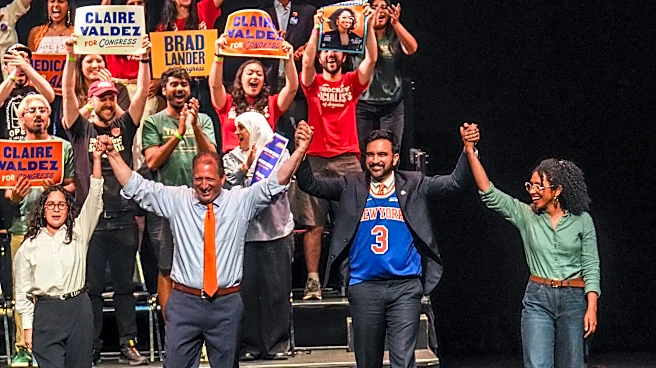
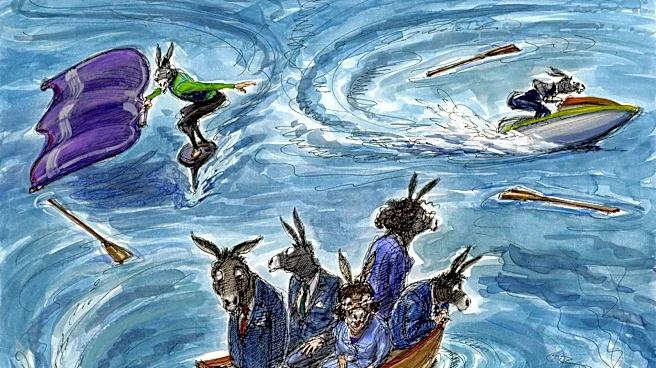
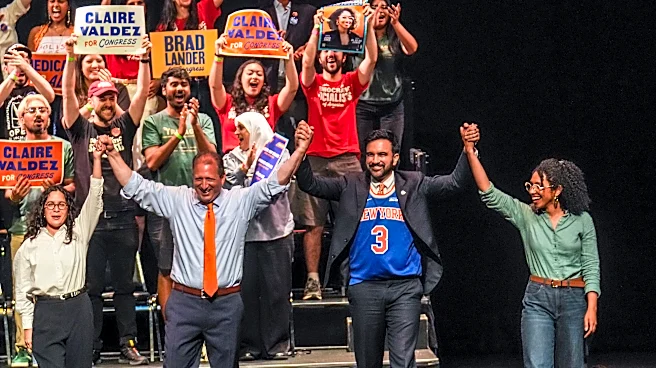
The 2026 Democratic primaries have become a battleground between progressive and centrist factions within the party. Progressive candidates are gaining traction, particularly in safe Democratic districts and mayoral contests, while centrist Democrats
have succeeded in several governor's races, such as in New Jersey and California. Notable victories include Graham Platner's Senate nomination in Maine and Zohran Mamdani's mayoral win in New York City. The primaries have seen an unprecedented number of ideological clashes, reflecting a weakening formal party structure and the rise of outside groups. Progressive candidates have been successful in advancing their agenda, echoing the grassroots energy seen during President Trump's first term.
Why It's Important?
The ongoing struggle between progressives and centrists within the Democratic Party could significantly impact its future direction. Progressive victories in primaries suggest a shift towards more left-leaning policies, which could influence the party's stance on key issues like healthcare and taxation. However, the success of centrist candidates in competitive races highlights the party's reliance on moderate nominees to maintain control in swing districts. This internal conflict may affect the party's ability to present a unified front in the general elections, potentially influencing its chances against Republican opponents. The outcome of these primaries could shape the Democratic strategy for the 2028 presidential election.
What's Next?
The general elections will serve as a critical test for the Democratic Party's internal dynamics. If progressive candidates fail to win in competitive races, it could bolster centrist arguments that the left is weakening the party's electoral prospects. The results will likely influence the party's approach in the 2028 presidential race, as Democrats weigh the appeal of progressive policies against the need for electability. The party's ability to balance these competing interests will be crucial in determining its future success.
Beyond the Headlines
The rise of progressive candidates reflects broader shifts within the Democratic Party, including a focus on economic populism and grassroots activism. This trend mirrors the party's response to President Trump's polarizing agenda, as seen in the 2018 victories of the 'Squad.' The increasing influence of outside groups and the decline of formal party structures suggest a transformation in how political campaigns are conducted. These developments may lead to long-term changes in the party's organizational dynamics and its approach to policy-making.