






What's Happening?
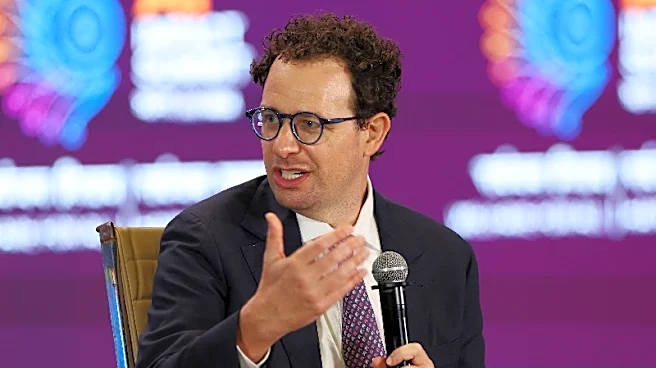
Sam Altman, CEO of OpenAI, has publicly supported Dario Amodei's call for the artificial intelligence industry to slow down its development pace and enhance safety measures. Altman stated that OpenAI would match Anthropic's commitment to provide independent
evaluators with employee-like access to their systems. This commitment involves offering outside teams desks, badges, company laptops, and the right to publish their findings regarding AI safety. Amodei, in his essay, also requested a narrow antitrust waiver from Washington to allow competitors to discuss safety protocols without legal repercussions. This move aims to foster collaboration on critical safety standards within the rapidly evolving AI sector. Elon Musk, who leads xAI, also briefly endorsed Amodei's stance, stating, 'Dario is right.'
Why It's Important?
This development is significant for the U.S. technology industry and regulatory landscape. The agreement between two major AI labs, OpenAI and Anthropic, to collaborate on safety standards could set a precedent for responsible AI development. A narrow antitrust waiver, if granted by Washington, would allow leading AI companies to openly discuss and implement safety measures, potentially mitigating risks associated with advanced AI systems. This could lead to a more unified approach to AI safety, fostering public trust and preventing a 'race to the bottom' in terms of safety standards. The involvement of key figures like Sam Altman and Dario Amodei underscores the growing recognition within the industry of the need for proactive safety measures and coordinated efforts to manage the societal impact of AI.
What's Next?
The immediate next step involves OpenAI implementing its commitment to provide independent evaluators with employee-like access, mirroring Anthropic's initiative. The industry will likely await Washington's response to Amodei's request for a narrow antitrust waiver, which would be crucial for facilitating broader industry-wide safety discussions. If granted, this waiver could pave the way for more structured collaborations among AI developers on safety protocols. The European Union's existing framework for sustainability agreements, which includes a 'soft safe harbor' for standards, might serve as a reference point for U.S. policymakers considering similar mechanisms for AI safety. The ongoing dialogue among AI leaders and policymakers will shape the future regulatory environment for artificial intelligence.
Beyond the Headlines
The push for coordinated AI safety measures raises deeper questions about the balance between innovation and regulation in emerging technologies. While the industry leaders are advocating for self-regulation and collaboration, the potential for market dominance and the ethical implications of powerful AI systems remain critical concerns. The concept of an antitrust waiver for safety discussions highlights the unique challenges posed by AI, where collaboration on safety might be seen as beneficial for public good, yet could also raise competition concerns. This situation could lead to a re-evaluation of traditional antitrust frameworks in the context of rapidly advancing technologies. The long-term implications include the potential for a global standard for AI safety, or conversely, a fragmented regulatory landscape if international cooperation falters.