



What's Happening?
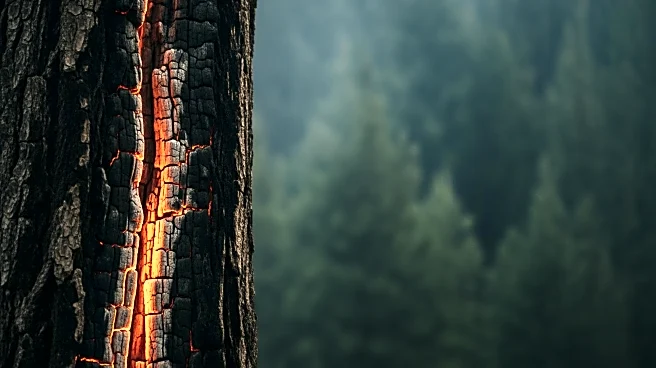
Recent wildfires in Argentina and Chile have been exacerbated by human-induced climate change, land-use changes, and significant budget cuts, according to a report by World Weather Attribution (WWA). The fires, which began in early January, have devastated
large areas of south-central Chile and parts of Argentina's Patagonia, including Los Alerces National Park, home to some of the world's oldest trees. The report highlights that these regions are experiencing 20% to 25% less rainfall due to climate change, driven by fossil fuel emissions. The analysis suggests that extreme fire weather conditions are now nearly three times as likely due to the 1.3°C of human-caused warming. Additionally, the presence of highly flammable pine tree plantations has increased wildfire risks. Budget cuts under President Javier Milei, who denies human-induced climate change, have further strained firefighting efforts, with the National Fire Management Service's budget reduced by 69% compared to 2023.
Why It's Important?
The intensification of wildfires in South America due to climate change and budgetary constraints poses significant threats to biodiversity and the environment. The destruction of ancient forests, such as those in Los Alerces National Park, not only impacts local ecosystems but also contributes to global climate change by releasing stored carbon. The situation underscores the urgent need for comprehensive climate policies and adequate funding for fire management services. The budget cuts in Argentina highlight the challenges faced by countries in balancing economic constraints with environmental protection. The fires also serve as a stark reminder of the broader impacts of climate change, which are increasingly affecting weather patterns and natural disasters worldwide.
What's Next?
Efforts to control the wildfires continue, with over 200 federal personnel and 278 public servants from Chubut province involved in the response. However, the ongoing budget cuts and denial of climate change by political leaders may hinder long-term solutions. Environmental groups and international organizations are likely to increase pressure on governments to acknowledge and address the root causes of these fires. The situation may also prompt discussions on international cooperation and support for countries facing similar challenges. As climate change continues to drive extreme weather events, the need for global action and investment in sustainable practices becomes increasingly critical.
Beyond the Headlines
The wildfires in South America highlight the complex interplay between climate change, economic policies, and environmental management. The denial of human-induced climate change by some political leaders poses ethical and practical challenges, as it can delay necessary actions to mitigate and adapt to climate impacts. The situation also raises questions about the responsibility of developed nations in supporting developing countries that are disproportionately affected by climate change. Long-term, the fires could lead to shifts in public opinion and policy, as communities directly impacted by these disasters demand more proactive measures to protect their environment and livelihoods.