

What's Happening?
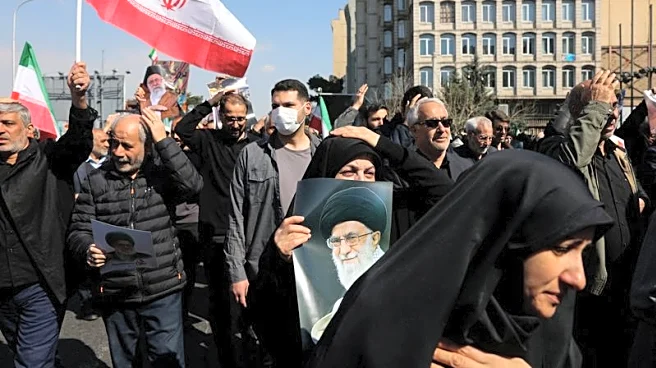
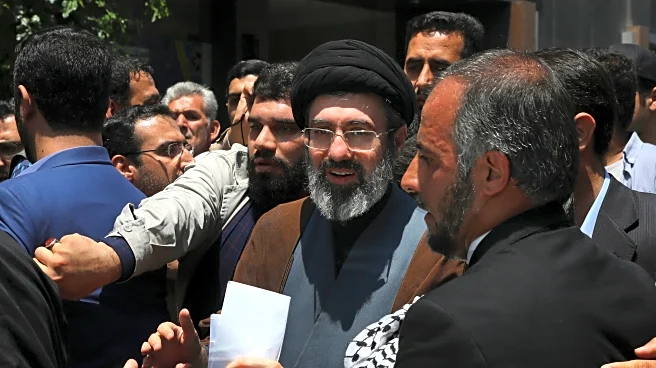
President Donald Trump has stated that Iran's forthcoming supreme leader will require U.S. approval to maintain their position. This assertion comes as Iran approaches the selection of a new leader following the death of Ayatollah Ali Khamenei. Trump emphasized
that without U.S. endorsement, the new leader would not last long in power. He expressed a desire to prevent future confrontations over Iran's nuclear ambitions, suggesting that a leader aligned with U.S. interests could avert such conflicts. Trump also indicated a willingness to work with remnants of the current regime if it ensures a stable leadership transition.
Why It's Important?
This development underscores the ongoing geopolitical tensions between the U.S. and Iran, particularly concerning nuclear proliferation and regional stability. Trump's comments highlight the U.S.'s strategic interest in influencing Iran's leadership to prevent nuclear escalation. The situation could impact U.S. foreign policy and military strategy in the Middle East, as well as international relations with allies and adversaries. The outcome of Iran's leadership transition could either stabilize or further destabilize the region, affecting global oil markets and security dynamics.
What's Next?
The next steps involve Iran's Assembly of Experts convening to elect a new supreme leader. The U.S. may engage in diplomatic or covert actions to influence this process. Potential reactions from Iran could include resistance to perceived U.S. interference, impacting bilateral relations. The international community will likely monitor the situation closely, with possible implications for nuclear negotiations and regional alliances.