




What's Happening?
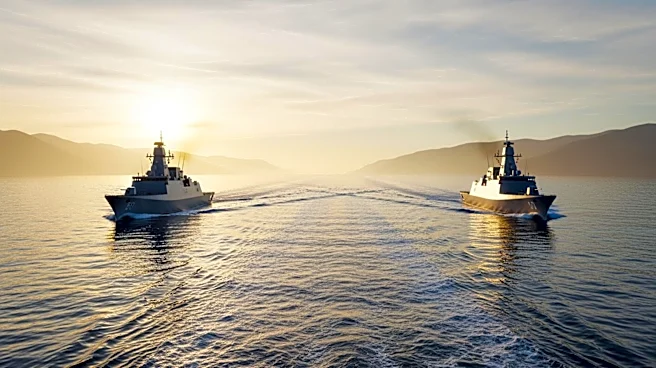
The U.S. Navy has made a significant move by sending two destroyers, the USS Michael Murphy and the USS Frank E. Peterson, through the Strait of Hormuz, a critical maritime passage. This action challenges Iran's control over the strait, which is a vital
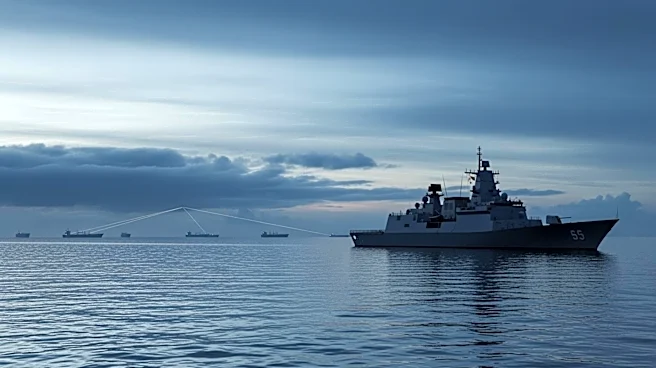
corridor for global oil and natural gas trade. The U.S. Central Command has announced efforts to clear mines placed by Iran's Islamic Revolutionary Guard Corps (IRGC) and establish a new passage for maritime commerce. The IRGC has issued warnings to the U.S. ships, emphasizing that any attempt to cross the strait would be met with a 'firm and forceful response.' This development occurs as the U.S. and Iran engage in ceasefire talks in Pakistan, aiming to resolve the ongoing conflict.
Why It's Important?
The Strait of Hormuz is a strategic chokepoint through which a significant portion of the world's oil supply is transported. Iran's control over this passage has been a major leverage point in its geopolitical strategy, especially during conflicts. The U.S. Navy's actions to ensure safe passage for commercial vessels could shift the balance of power in the region, potentially reducing Iran's influence. This move also signals the U.S.'s commitment to maintaining open sea lanes, which is crucial for global energy markets. The outcome of these actions could impact global oil prices and energy security, affecting economies worldwide.
What's Next?
As the U.S. continues to bolster its military presence in the region, including the deployment of additional aircraft carriers and troops, the situation remains tense. The ongoing ceasefire talks in Pakistan could lead to a diplomatic resolution, but the potential for further military confrontation looms. The U.S. aims to weaken Iran's ability to disrupt shipping, which could pave the way for a more stable and secure Strait of Hormuz. However, Iran's response to these developments will be critical in determining the future of the region's stability.