





What's Happening?
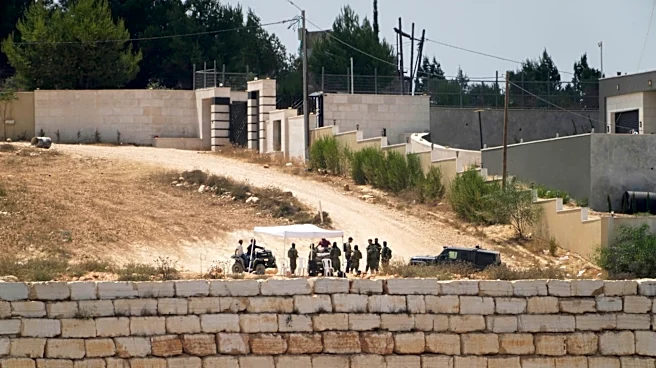
Loui Ridi, an Ohio-based Palestinian American, has returned to his home in the occupied West Bank village of Qusra, south of Nablus, after it had been under siege by Israeli settlers for over a week. Ridi traveled to his property on Monday to join family
members who have been defending it. The standoff in Qusra has involved groups of settlers surrounding several Palestinian houses and preventing residents from leaving. The United States has condemned the siege, and the Israeli military has deployed troops, stating their purpose is to maintain order. Ridi had been monitoring the situation from the U.S. via home security cameras and expressed his inability to sleep while his home was under threat. Upon his arrival, he reunited with his mother and sister before proceeding to his house, where his brother and teenage son had remained to protect the property.
Why It's Important?
This incident highlights the escalating violence and tensions in the West Bank, particularly the increasing attacks by Israeli settlers on Palestinian towns and villages. The involvement of a U.S. citizen, Loui Ridi, brings an international dimension to the conflict, drawing attention from the United States government, which has condemned the siege. The situation underscores the challenges faced by Palestinian Americans who own property in the West Bank and the difficulties they encounter in protecting their assets and ensuring the safety of their families amidst ongoing conflict. The deployment of Israeli troops, ostensibly to maintain order, yet with reports of amicable interactions between soldiers and settlers, raises questions about the impartiality and effectiveness of security forces in protecting Palestinian residents. This event contributes to the broader narrative of human rights concerns and the complexities of the Israeli-Palestinian conflict.
What's Next?
Loui Ridi's immediate focus will be on securing his home and ensuring the safety of his family in Qusra. The declaration of the neighborhood as a closed military zone by Israel suggests continued military presence, though the effectiveness of this measure in preventing settler actions remains to be seen. The U.S. condemnation of the siege may lead to diplomatic pressure on Israel to ensure the protection of Palestinian residents and their property, especially those with U.S. citizenship. The ongoing violence in the West Bank indicates that similar incidents are likely to continue, requiring sustained international attention and efforts towards de-escalation and protection of civilians. Ridi's experience may also prompt further advocacy from Palestinian American communities regarding property rights and safety in the West Bank.
Beyond the Headlines
The siege of Loui Ridi's home by Israeli settlers, despite his U.S. citizenship, exposes the deep-seated issues of land ownership, displacement, and the rule of law in the occupied West Bank. It illustrates how the conflict directly impacts individuals and families, transcending political rhetoric to become a personal struggle for survival and property. The perceived inaction or complicity of some Israeli soldiers in the face of settler aggression further erodes trust and exacerbates the humanitarian crisis. This incident also brings to light the emotional and psychological toll on individuals like Ridi, who are forced to watch their homes besieged from afar and then return to a volatile situation. It underscores the complex interplay of international relations, human rights, and personal narratives within the broader Israeli-Palestinian conflict, highlighting the urgent need for effective protection mechanisms and accountability.