





What's Happening?
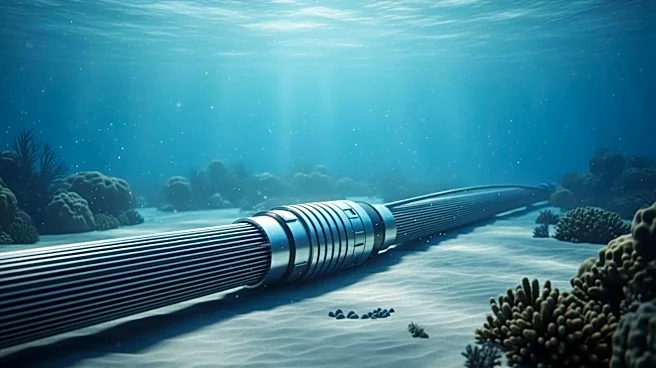
The Persian Gulf has been identified as the highest-risk area in the 2026 Cable Risk Intelligence report by Starboard Maritime Intelligence. The region scored 4.6 out of 5.0 on the risk index, primarily due to geopolitical tensions, high traffic density,
and limited repair access. Recent developments have exacerbated these risks, with Iran threatening to sever submarine cables in the Strait of Hormuz amid ongoing conflicts. This area is crucial as it hosts at least 17 cable systems that facilitate data traffic between Asia and Europe. The conflict has halted cable construction and repair activities, as repair ships cannot operate safely in the region. Starboard's report emphasizes the importance of early detection and risk management to prevent cable damage, using advanced monitoring technologies to identify potential threats before they materialize.
Why It's Important?
The high risk associated with the Persian Gulf's submarine cables has significant implications for global data traffic and communication infrastructure. The region's cables are vital for connecting Asia and Europe, and any disruption could lead to substantial data transmission delays and economic impacts. Operators face increased pressure to implement robust risk management strategies to safeguard these critical infrastructures. The situation underscores the need for international cooperation and investment in resilient infrastructure to mitigate potential disruptions. The ability to detect and respond to threats proactively is crucial for maintaining the integrity of global communication networks, which are essential for economic stability and security.
What's Next?
Operators and stakeholders in the submarine cable industry are likely to focus on enhancing their risk management and monitoring capabilities. This may involve integrating advanced technologies, such as AIS and satellite data, into their operational workflows to improve threat detection and response times. The ongoing conflict in the Persian Gulf may prompt further geopolitical discussions and negotiations to ensure the safety and security of these critical infrastructures. Additionally, there may be increased collaboration between governments, defense agencies, and private operators to develop comprehensive strategies for protecting submarine cables in high-risk areas.
Beyond the Headlines
The situation in the Persian Gulf highlights broader issues related to the vulnerability of global communication infrastructures in conflict zones. The ambiguity surrounding vessel activities and the potential for deliberate cable damage pose significant challenges for legal and operational responses. This underscores the need for clear international regulations and agreements to protect submarine cables and ensure accountability for any disruptions. The development and implementation of advanced monitoring technologies could set a precedent for how similar risks are managed in other regions, potentially leading to long-term shifts in how global communication networks are secured.