



What's Happening?
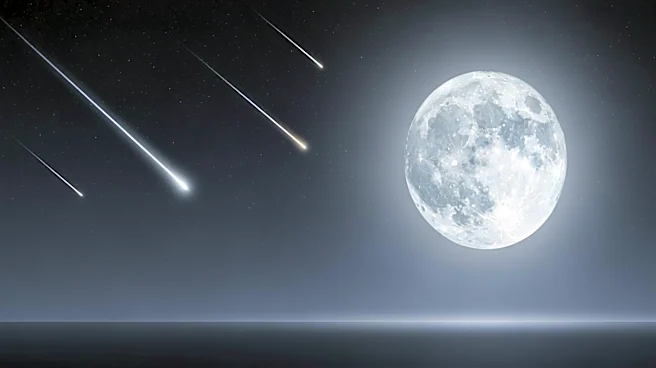
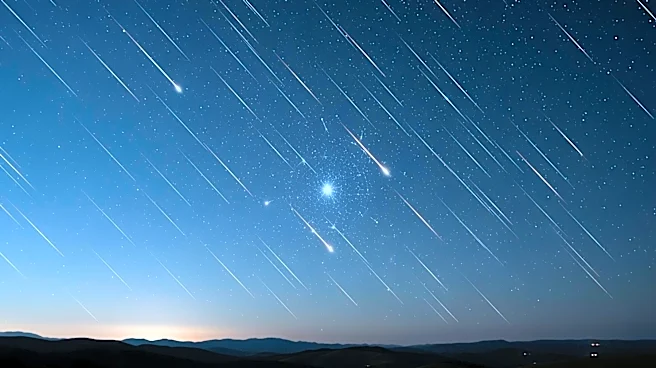
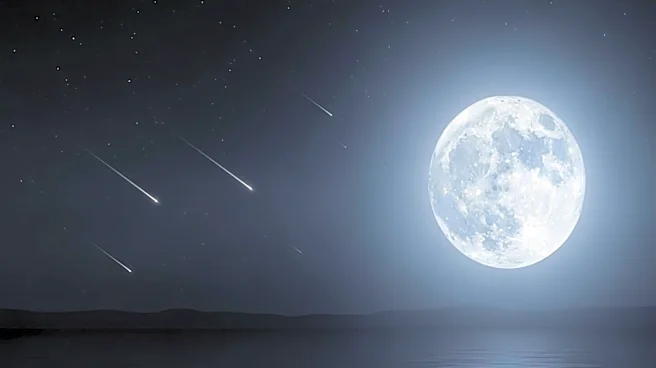
The Eta Aquarid meteor shower is set to peak in the early morning hours of May 5-6, providing an opportunity for stargazers to witness a significant celestial event. Known for their speed, the Eta Aquarid meteors enter Earth's atmosphere at approximately
40.7 miles per second, creating glowing trails that linger momentarily. According to NASA, under optimal conditions, observers can expect to see up to 50 meteors per hour. The shower's radiant, or the point in the sky from which the meteors appear to originate, is located in the constellation Aquarius. For the best viewing experience, it is recommended to look towards the east during the pre-dawn hours. The meteor shower is associated with Halley's Comet, which orbits the Sun every 76 years. Although the peak offers the most spectacular views, meteors will continue to be visible until around May 21, albeit less brightly.
Why It's Important?
Meteor showers like the Eta Aquarids provide a unique opportunity for both amateur and professional astronomers to observe and study celestial phenomena. This event not only captivates the public's imagination but also contributes to scientific understanding of cometary debris and its interaction with Earth's atmosphere. The visibility of such events can boost interest in astronomy and science education, encouraging more people to engage with space-related activities. Additionally, meteor showers are a reminder of Earth's place in the solar system and the dynamic nature of space, fostering a broader appreciation for the universe.
What's Next?
Following the peak of the Eta Aquarid meteor shower, stargazers can look forward to several other significant meteor showers throughout the year. These events will continue to offer opportunities for observation and study. As interest in space and astronomy grows, educational institutions and observatories may organize viewing events and workshops to engage the public. The ongoing observation of meteor showers also aids in tracking the paths of comets and understanding their long-term impacts on Earth's atmosphere.