


What's Happening?
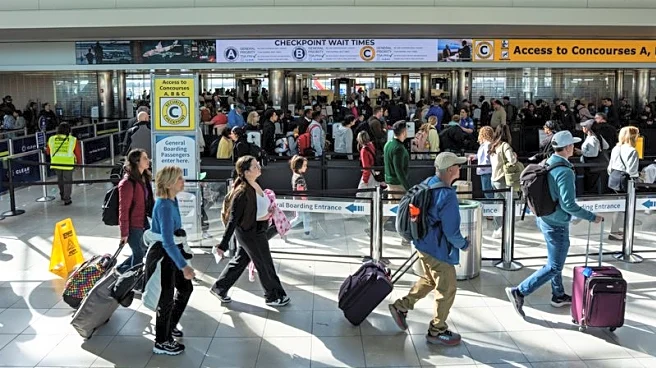
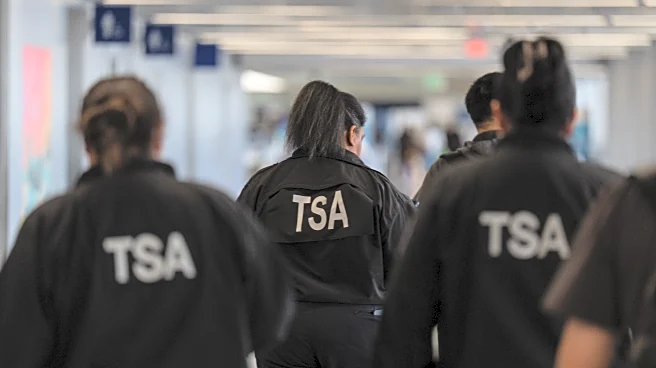
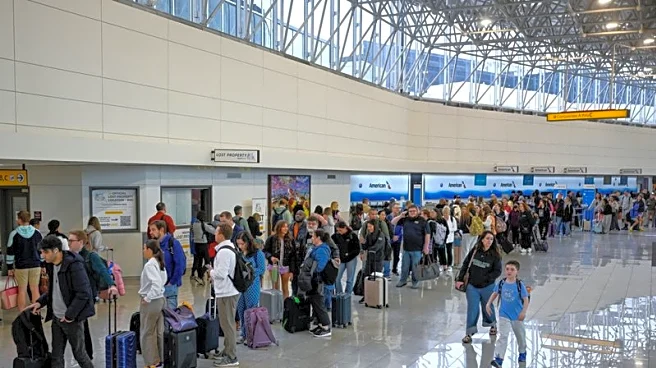
Airports across the United States are beginning to return to normal operations after President Trump issued an order to pay Transportation Security Administration (TSA) agents using existing homeland security funds. This decision comes after weeks of
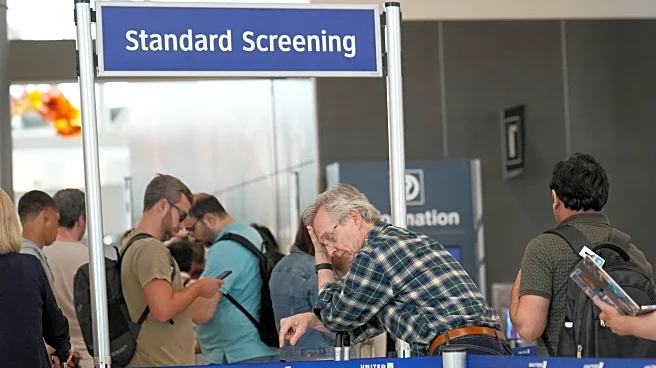
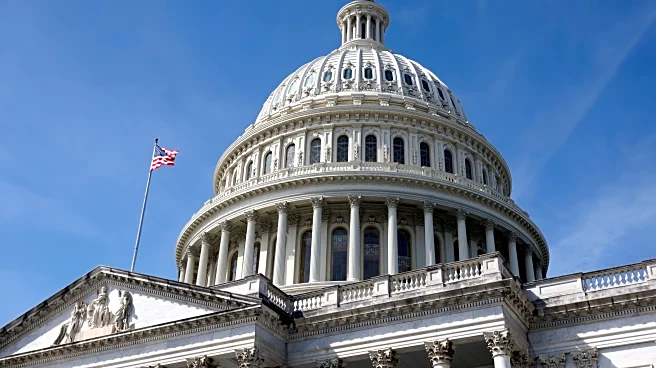
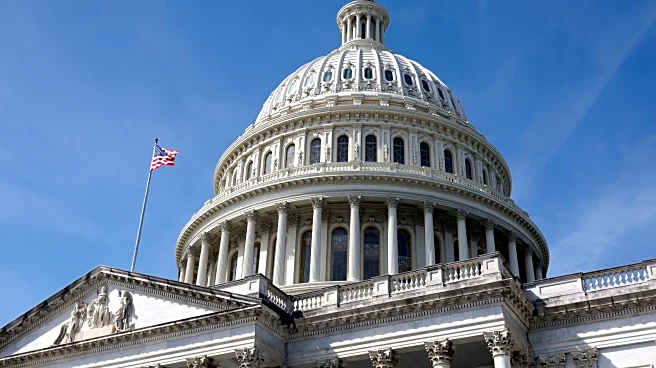
significant disruptions at airports due to unpaid TSA agents quitting or not showing up for work amid a Congressional funding impasse. The situation had led to massive security lines and delays, particularly affecting major travel hubs. The order also included deploying Immigration and Customs Enforcement (ICE) agents to assist with airport security. Despite these measures, some airports, such as Atlanta's Hartsfield-Jackson International, continue to experience long wait times, with travelers advised to arrive hours in advance. The Senate had reached a partial funding agreement for the Department of Homeland Security, excluding ICE, but the House did not pass the bipartisan bill, leading to a two-week Congressional recess.
Why It's Important?
The decision to pay TSA agents is crucial in stabilizing the U.S. air travel system, which had reached a breaking point due to the shutdown. The move is expected to alleviate the immediate staffing shortages and reduce wait times, thus improving the travel experience for millions of passengers. This development highlights the critical role of TSA agents in maintaining national security and the functioning of the air travel infrastructure. The funding impasse in Congress underscores the challenges in reaching bipartisan agreements on essential services, affecting not only government employees but also the general public relying on these services. The situation also reflects broader issues within the U.S. political system, where partisan divides can lead to significant disruptions in public services.
What's Next?
TSA agents are expected to begin receiving paychecks soon, which should help stabilize staffing levels at airports. However, the underlying funding issues remain unresolved, with Congress on recess and no immediate solution in sight for the broader Department of Homeland Security funding, including ICE. The situation may prompt further political negotiations and potential legislative action once Congress reconvenes. Stakeholders, including airlines and travel industry groups, are likely to continue advocating for a long-term resolution to prevent future disruptions. The ongoing political dynamics will be crucial in determining the stability of U.S. air travel and the effectiveness of homeland security operations.