




What's Happening?
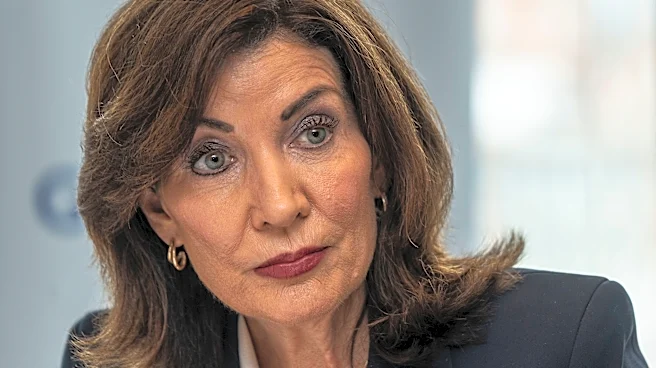
New York Governor Kathy Hochul recently visited the grave site of Rabbi Menachem Mendel Schneerson, known as the Lubavitcher Rebbe, in Cambria Heights, Queens, New York City, on October 9, 2026. This marks another visit for the Governor to the resting
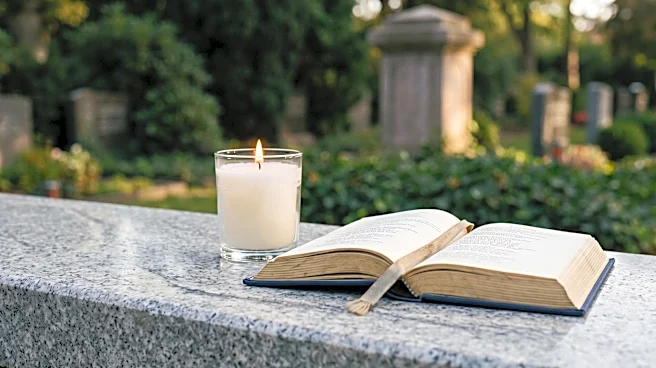
place of the Rebbe, who passed away in 1994, as well as the graves of his wife and father-in-law. During her visit, Governor Hochul lit a memorial candle, gave charity, and read Psalms, reflecting on the Rebbe's legacy and his significant impact on global Jewry and the Jewish community within New York State. She was accompanied by Devorah Halberstam, whose son Ari Halberstam was a victim of an antisemitic terror attack in 1994, and Rabbi Motti Seligson, a Chabad-Lubavitch spokesman. Governor Hochul stated that she was 'humbled' to visit the Chabad Ohel Lubavitch, acknowledging New York's status as having the largest Jewish population outside of Israel.
Why It's Important?
Governor Hochul's visit underscores the significant cultural and political influence of the Chabad-Lubavitch movement and the broader Jewish community in New York State. Her public acknowledgment of the Lubavitcher Rebbe's legacy highlights the importance of religious leaders and their contributions to society, even decades after their passing. This gesture can be seen as an effort to connect with and show respect for a substantial demographic within her constituency. Furthermore, her visit with Devorah Halberstam, whose son was a victim of antisemitic terror, reinforces the state's commitment to combating antisemitism and hate, a critical issue for many communities. Such engagements by high-ranking officials can foster a sense of inclusion and recognition among diverse religious and ethnic groups, potentially strengthening community relations and trust in state leadership.
What's Next?
Governor Hochul's continued engagement with various community leaders and religious groups is likely to be a recurring aspect of her public service. This visit may lead to further discussions or initiatives aimed at supporting the Jewish community in New York, particularly in areas concerning religious freedom, cultural preservation, and combating hate crimes. The emphasis on the Rebbe's legacy and the fight against antisemitism could inspire future policy considerations or public awareness campaigns. Additionally, such high-profile visits often set a precedent for other political figures to engage with diverse communities, potentially leading to broader interfaith dialogue and collaboration on social issues within the state.
Beyond the Headlines
Beyond the immediate political and community relations aspects, Governor Hochul's visit touches upon deeper themes of historical memory, religious identity, and the enduring impact of spiritual leadership. The Lubavitcher Rebbe's story, including his escape from Nazi Europe and his efforts to rebuild the Jewish community, serves as a powerful narrative of resilience and renewal. By acknowledging this history, Governor Hochul implicitly recognizes the struggles and triumphs that have shaped New York's diverse population. The visit also highlights the role of religious sites as places of reflection and inspiration, transcending their spiritual function to become symbols of community strength and continuity. This engagement can contribute to a broader understanding of the intricate tapestry of beliefs and histories that define American society.