







What's Happening?
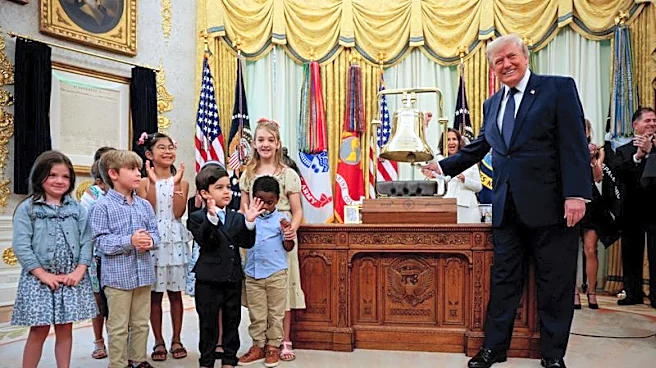
The Trump Administration has introduced a new savings initiative called Trump Accounts, aimed at encouraging investment among American children. The program, which was launched with a ceremonial ringing of the Wall Street opening bell, allows children under
18 to have savings accounts with a $1,000 initial contribution for those born between 2025 and 2028. The accounts are designed to promote stock ownership, a historically unevenly distributed asset in the U.S. The funds must be invested in low-cost index funds and can be accessed when the child turns 18. However, early withdrawals are subject to taxes and penalties. Despite the initiative's potential, critics argue that it may not significantly benefit lower-income families due to its complexity and potential penalties.
Why It's Important?
The Trump Accounts initiative represents a significant effort to address wealth inequality by providing children with a financial foothold. By promoting early investment, the program aims to foster financial literacy and long-term economic stability. However, the complexity of the program and potential penalties for early withdrawal may limit its effectiveness, particularly for lower-income families who might need to access funds earlier. The success of this initiative could influence future policies aimed at reducing economic disparities and promoting financial inclusion.
What's Next?
As the program rolls out, its impact on American families will be closely monitored. The administration may face pressure to simplify the process and address concerns about penalties to ensure broader accessibility. Financial institutions and policymakers will likely evaluate the program's effectiveness in promoting savings and investment among young Americans. The upcoming mid-term elections could also influence the program's future, as economic issues remain a key concern for voters.