





What's Happening?
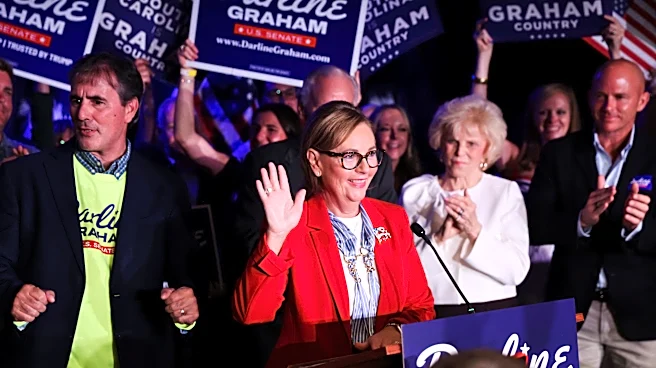
U.S. Senator Darline Graham has won the Republican special primary runoff in South Carolina against U.S. Representative Ralph Norman. The victory, called at 9:01 p.m. on Tuesday night, positions Graham to face Democrat Dr. Annie Andrews in the November
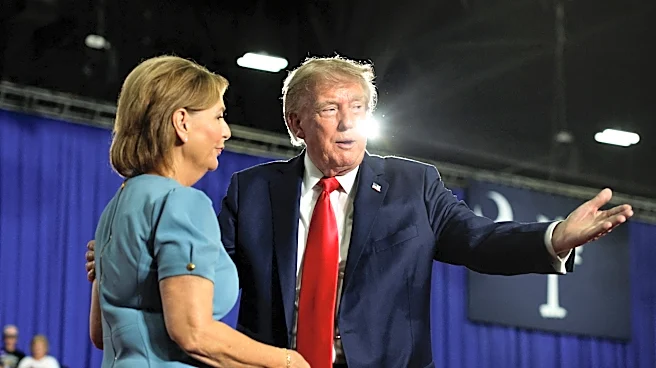
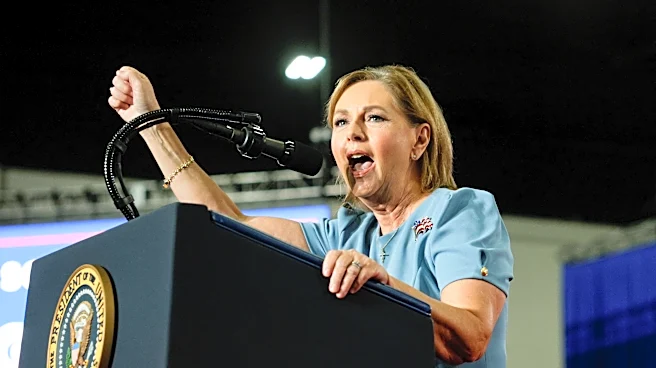
general election. Graham's campaign received a significant boost from President Trump's endorsement and financial support from MAGA Inc. Her win comes despite initial criticism regarding her presence in Washington D.C. for Senate votes rather than engaging with South Carolina constituents, and a notable misstep in a debate where she stated, "National security is not my thing." Governor Henry McMaster, who initially appointed Graham to the Senate seat after the unexpected passing of her brother, the late Senator Lindsey Graham, joined her on stage to celebrate her primary success. Norman, in his concession speech, expressed his dismay over external PAC money spent against him and questioned President Trump's involvement in the race, though he pledged to support Graham in the general election.
Why It's Important?
This primary outcome is significant for the Republican Party in South Carolina and nationally. The strong influence of President Trump's endorsement, even in a primary runoff, underscores his continued sway within the party and among its voter base. This victory demonstrates that a direct endorsement from President Trump can be a decisive factor, potentially overriding concerns about a candidate's initial policy unfamiliarity or perceived lack of local engagement. For South Carolina, a state that has not elected a Democrat to statewide office in two decades, Graham's win sets the stage for a general election that will test the Democratic Party's ability to challenge established Republican dominance. The race will also be a barometer for the effectiveness of grassroots campaigning versus high-profile endorsements and external funding in shaping voter decisions. The outcome will determine who represents South Carolina in the U.S. Senate for a full six-year term, impacting legislative priorities and the balance of power in Congress.
What's Next?
Senator Darline Graham will now advance to the November general election to compete against Democrat Dr. Annie Andrews. The campaign is expected to intensify, with both candidates likely to focus on contrasting their backgrounds and policy visions for South Carolina. Graham will aim to consolidate Republican support, leveraging her primary victory and the continued backing of President Trump. Andrews, on the other hand, will likely seek to capitalize on any lingering doubts about Graham's policy expertise and appeal to a broader electorate, including independent and moderate voters. The general election will be a crucial test of whether the Republican Party's strong base, energized by President Trump's involvement, can secure another statewide victory, or if the Democratic challenger can break the two-decade-long Republican winning streak in South Carolina. The race will also be closely watched for its implications on national political trends and the ongoing influence of presidential endorsements in down-ballot races.
Beyond the Headlines
The South Carolina primary runoff highlights several deeper implications for the U.S. political landscape. Firstly, it reinforces the power of personality and endorsement from prominent figures like President Trump in shaping electoral outcomes, potentially overshadowing traditional political experience or policy depth. This trend could further entrench a focus on national political figures in local and state races. Secondly, the criticism faced by Senator Graham for being in Washington D.C. rather than engaging locally, coupled with her debate misstep, points to a potential disconnect between voter expectations for local representation and the realities of national political life. This could prompt future candidates to re-evaluate their campaign strategies to balance national duties with local visibility. Lastly, the significant role of external PAC money, as noted by Ralph Norman, underscores the increasing influence of national funding in state-level elections, raising questions about campaign finance reform and the impact of outside interests on local democratic processes. The election will also be a case study in how a candidate can overcome perceived weaknesses with strong party backing.