


What's Happening?
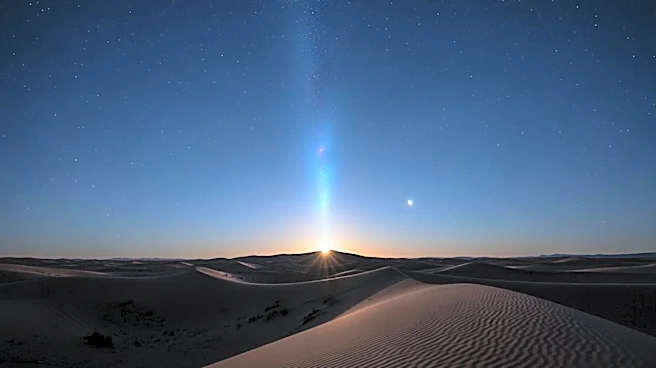
Astronomy Magazine reports that the night sky on April 17, 2026, presents an ideal opportunity to observe the zodiacal light, a faint glow caused by sunlight scattering off dust particles in the solar system. This phenomenon is best viewed in the western
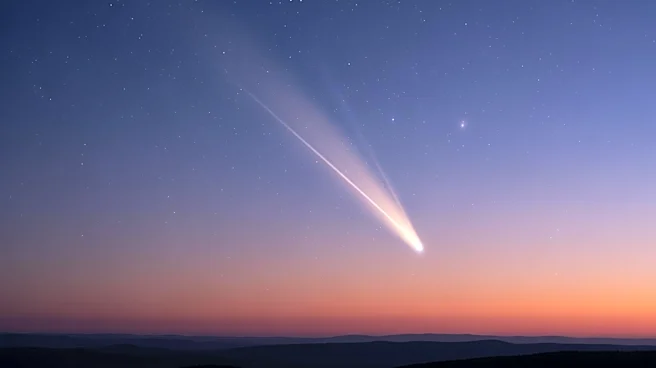
sky after sunset, particularly during a New Moon when the sky is darker. The dust responsible for this glow originates from comets that have traveled through the inner solar system, leaving behind small grains. The zodiacal light appears as a cone-shaped glow, with its base near the horizon and its tip extending into the constellations of Gemini or Cancer.
Why It's Important?
The opportunity to observe the zodiacal light is significant for both amateur and professional astronomers, as it provides a chance to study the composition and distribution of interplanetary dust. This phenomenon also offers insights into the behavior of comets and the dynamics of the solar system. For the general public, it is a rare and beautiful celestial event that can enhance interest in astronomy and space science. The event underscores the importance of preserving dark skies, free from light pollution, to allow such natural phenomena to be observed.