





What's Happening?
The World Bank has released two reports highlighting that the Philippines, despite having one of the most developed disaster and climate risk planning systems among developing nations, struggles with effective implementation. The reports, titled 'Building
Resilience into the Blueprint: What Works, What Doesn’t, and Why? Insights from Asia-Pacific Countries on Risk-Informed Spatial Planning' and its accompanying country case studies, describe the Philippines' approach as 'policy-rich but implementation-poor.' Key issues identified include weak enforcement of zoning ordinances, inconsistent application of risk-informed plans, and uneven capacity among local government units (LGUs). Smaller municipalities, often more exposed to hazards, lack the resources to meet basic climate and disaster risk assessment (CDRA) requirements, while political interference and institutional inertia allow development in high-risk areas. The absence of a National Land Use Act (NaLUA) further weakens the legal foundation for spatial planning, making disaster risk integration reliant on less stable agency guidelines. Additionally, a 'science-policy time lag' means many plans use outdated climate scenarios, potentially underestimating future risks.
Why It's Important?
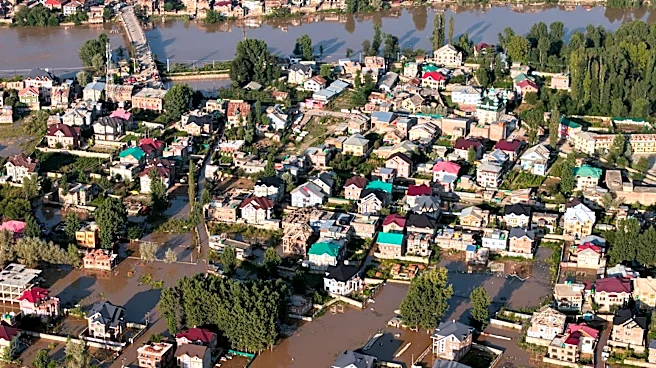
The World Bank's findings underscore a critical challenge in disaster preparedness and climate resilience for the Philippines, a nation highly vulnerable to natural hazards. The gap between comprehensive planning and on-the-ground implementation means that despite robust frameworks, communities remain exposed to risks from typhoons, flooding, and sea-level rise. This situation has significant implications for public safety, economic stability, and sustainable development. Inconsistent enforcement and political pressures can lead to increased loss of life, damage to infrastructure, and displacement of populations. The reliance on outdated climate data means that current plans may not adequately prepare for the escalating impacts of climate change, potentially leading to greater future costs in disaster response and recovery. The lack of a unified legislative foundation through a NaLUA creates a fragmented approach to land use, making it difficult to consistently integrate risk reduction across all levels of governance and protect vulnerable communities from unchecked development in hazardous zones.
What's Next?
To address these implementation gaps, the World Bank recommends several key actions. These include stronger national legislation, improved formal coordination between disaster-risk and planning agencies, and enhanced local technical capacity. Mechanisms to insulate technical land-use decisions from short-term political pressure are also crucial. For a highly decentralized system like the Philippines, sustained technical assistance, standardized tools, and meaningful national oversight are essential to ensure consistent plan quality and genuine compliance with national requirements. The reports suggest that without these reforms, the Philippines will continue to face challenges in translating its advanced planning systems into tangible resilience outcomes. Future efforts will likely focus on legislative reforms, capacity-building programs for LGUs, and the integration of the latest climate science into planning guidelines to better prepare for and mitigate the impacts of climate change and natural disasters.
Beyond the Headlines
The World Bank's assessment reveals deeper systemic issues beyond mere policy implementation. It highlights the interplay of governance, political will, and socio-economic disparities in disaster risk reduction. The 'planning fatigue' caused by numerous mandated sectoral plans and high personnel turnover in LGUs after elections erode institutional memory and hinder long-term strategic planning. The discretionary authority of local zoning boards to grant exceptions based on political or economic pressure undermines scientific risk assessments, particularly in rapidly developing peri-urban areas where land values are high. This creates an ethical dilemma where economic interests can override public safety and environmental protection. The findings also point to a broader challenge in many developing countries: the struggle to translate scientific knowledge into actionable policy and enforce regulations against powerful development interests. Addressing these issues requires not only technical solutions but also fundamental reforms in governance, accountability, and a commitment to prioritizing long-term resilience over short-term gains.