









What's Happening?
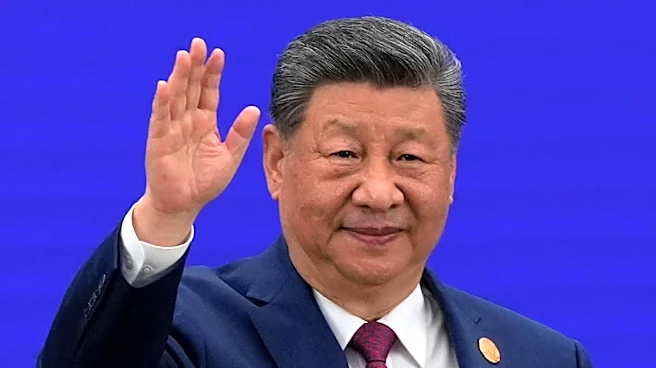
Chinese President Xi Jinping announced at the World AI Conference in Shanghai that China will enhance its artificial intelligence (AI) cooperation with developing countries. This initiative includes providing 5,000 training opportunities over the next
five years. The announcement coincides with the establishment of the World Artificial Intelligence Cooperation Organization (WAICO), which will be headquartered in Shanghai. The organization aims to promote global AI governance and was formed by an agreement signed by 29 countries. Xi emphasized the need for AI to remain 'secure and controllable' and advocated against the 'overstretching' of national security concerns in AI. He called for a 'people-centered' approach to AI governance, highlighting the importance of international cooperation in AI development.
Why It's Important?
The expansion of AI cooperation by China signifies a strategic move to position itself as a leader in global AI governance, particularly in the Global South. By offering training and collaboration opportunities, China aims to strengthen its influence in developing regions, potentially countering Western dominance in AI technology. This initiative could lead to increased technological capabilities in participating countries, fostering economic growth and innovation. However, it also raises concerns about data privacy and the ethical use of AI, as China's approach to AI governance may differ from Western standards. The establishment of WAICO could serve as a platform for China to shape global AI policies, impacting international relations and technological standards.
What's Next?
The formation of WAICO and China's commitment to AI cooperation are likely to prompt responses from other major AI players, including the United States and European Union. These regions may seek to strengthen their own AI partnerships and governance frameworks to maintain influence in the global AI landscape. Additionally, the focus on AI security and control could lead to further discussions on international AI regulations and standards. As China implements its training programs, the effectiveness and impact of these initiatives on developing countries will be closely monitored by global stakeholders.
Beyond the Headlines
The emphasis on AI cooperation and governance reflects broader geopolitical dynamics, where technology is increasingly becoming a tool for soft power. China's approach to AI, which includes a focus on security and control, may influence how AI is perceived and regulated globally. This development could also spark debates on the ethical implications of AI, particularly in terms of surveillance and privacy. As AI technology continues to evolve, the balance between innovation and regulation will be a critical issue for policymakers worldwide.