


What's Happening?
Following the destructive Palisades and Eaton fires in Los Angeles County, a rebuilding program named RESET has been launched to construct climate-responsive homes in the Santa Monica Mountains. This initiative brings together four Los Angeles architecture
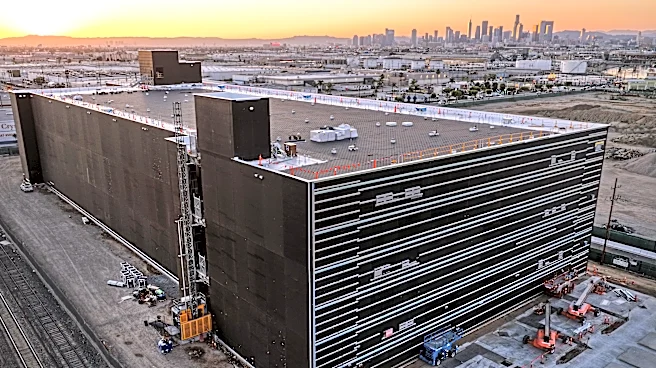
firms—EYRC Architects, Montalba Architects, RIOS, and Woods + Dangaran—along with an engineering firm, a permitting agency, an insurer, and a manufacturer of off-site, cold-formed-steel structural framing. The program, created by Builders Workshop, aims to deliver homes that exceed building codes, offer transparent pricing, and comply with wildland-urban interface requirements. The goal is to streamline the construction process, which often faces systemic regulatory hurdles in Southern California, by offering pre-designed homes that are easier to permit, build, and insure. Ghost Factory, a manufacturer of cold-formed-steel structural panels, is a key partner, with plans to deploy a second production facility in Los Angeles in 2027 to support the construction of approximately 40 RESET homes in the Palisades within the next few years.
Why It's Important?
This initiative is crucial for addressing the ongoing challenge of rebuilding in wildfire-prone regions of the U.S., particularly in California. The RESET program's integrated approach aims to mitigate the risks associated with future conflagrations by incorporating fire-resistant materials like cold-formed steel and specific design elements such as cementitious skins and a lack of eaves. By offering pre-approved, insurable home designs, the program seeks to reduce the financial and bureaucratic burdens on homeowners and developers, potentially setting a new standard for resilient construction in high-risk areas. The involvement of Marsh McLennan, guaranteeing underwriting for these designs, highlights a significant shift in how the insurance industry is engaging with climate-resilient building practices. This could lead to broader adoption of similar models in other regions facing environmental threats, impacting construction practices, insurance policies, and urban planning nationwide.
What's Next?
The RESET program plans to construct approximately 40 homes in the Palisades over the next few years, with Ghost Factory's second production facility, GF001, scheduled to deploy in Los Angeles in 2027. This expansion will likely accelerate the construction process and increase the availability of these climate-responsive homes. The success of this program could influence regulatory bodies to adopt similar streamlined processes and building standards for other wildfire-prone areas. Furthermore, the collaboration between architects, engineers, insurers, and manufacturers in this integrated model may serve as a blueprint for future disaster recovery and prevention efforts across the U.S., potentially leading to more resilient communities and a reduction in long-term disaster-related costs.
Beyond the Headlines
The RESET program represents a deeper shift in how communities are approaching climate adaptation and resilience. Beyond the immediate goal of rebuilding, it addresses the systemic issues of regulatory complexity, construction efficiency, and insurability in high-risk zones. The emphasis on pre-designed, fire-resistant homes and the integration of off-site manufacturing could transform the construction industry by promoting standardization and speed, while also ensuring higher quality and safety standards. This model could also influence public perception of sustainable and resilient housing, encouraging a broader demand for homes that are not only aesthetically pleasing but also built to withstand environmental challenges. The program's success could foster a new paradigm where proactive, integrated solutions become the norm for urban development in vulnerable areas, moving beyond reactive disaster response to preventative, climate-conscious planning.