



What's Happening?
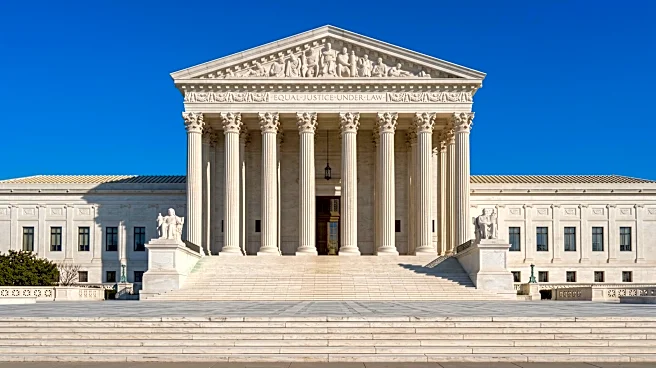
Republican campaign groups, with the support of the Trump administration, have petitioned the Supreme Court to allow them to purchase television advertising at discounted rates. This emergency appeal follows a decision by the 4th US Circuit Court of Appeals,
which ruled that federal law provides lower ad rates only for candidates, not for political parties or other entities. Earlier this year, the Federal Communications Commission (FCC) had issued guidance suggesting that political parties were also entitled to these lower rates, a decision widely seen as beneficial to Republicans who often raise more money through party committees. The House and Senate Republican party committees stated they had budgeted tens of millions of dollars for ad buys under the FCC's interpretation, but broadcast stations are now rescinding those rates due to the appeals court ruling. The Republican committees argue that federal courts lack jurisdiction over the case because the FCC's guidance was neither agency action nor final. They have requested the Supreme Court to act on their appeal by Friday.
Why It's Important?
This case carries significant implications for the funding and strategy of political campaigns, particularly in the context of upcoming midterm elections. Access to discounted television ad rates can substantially reduce campaign costs, allowing parties to allocate resources more broadly or increase their advertising presence. The FCC's initial guidance was perceived to favor the Republican Party, which typically relies more on party committee fundraising compared to Democrats, who often raise more directly through individual candidates. A Supreme Court decision upholding the appeals court ruling would likely increase advertising costs for Republican party committees, potentially impacting their ability to compete effectively in key races. Conversely, a ruling in favor of the Republican groups would provide a financial advantage, enabling them to stretch their advertising budgets further. This legal battle highlights the ongoing tension between campaign finance regulations and the desire of political entities to maximize their outreach, with potential to reshape the financial landscape of U.S. elections.
What's Next?
The Supreme Court is expected to act on the emergency appeal in the coming weeks, with a request for a decision by Friday. The outcome will determine whether Republican campaign groups can continue to access discounted television advertising rates, directly influencing their financial strategies for the current election cycle. Should the Supreme Court side with the Republican groups, it would reaffirm the FCC's broader interpretation of discounted ad rates, potentially setting a precedent for future elections. If the Court upholds the 4th Circuit's decision, Republican committees will face higher advertising costs, necessitating a re-evaluation of their campaign spending. This decision could also prompt further legal challenges or legislative efforts to clarify the scope of discounted ad rates for political entities. The ruling will be closely watched by both political parties and broadcasters, as it will impact how political advertising is priced and distributed across the country.
Beyond the Headlines
The legal dispute over discounted TV ad rates touches upon deeper issues concerning the fairness and accessibility of political communication in the United States. The debate over whether political parties should receive the same discounted rates as individual candidates raises questions about the role of party committees versus candidate campaigns in the electoral process. A broader interpretation of discounted rates could empower party organizations, potentially centralizing campaign messaging and resource allocation. Conversely, a narrower interpretation might encourage more candidate-centric campaigns. This case also reflects the ongoing ideological divisions within the judiciary, as evidenced by the 6-3 conservative majority on the Supreme Court and the split decision in the 4th Circuit. The outcome could further solidify the influence of money in politics, depending on which entities are granted more favorable advertising conditions, and may lead to renewed calls for campaign finance reform to address perceived imbalances in political spending.