


What's Happening?
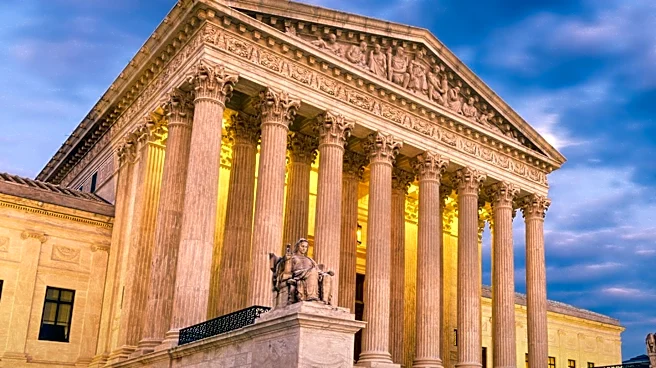
The U.S. Supreme Court's June 2026 decision in *Cisco Systems Inc. v. Doe* has effectively closed the door on modern human rights claims brought under the Alien Tort Statute (ATS). This ruling determined that the ATS's implied cause of action does not
cover such claims. The ATS, passed in 1789, grants federal courts jurisdiction over civil actions by aliens for torts violating the law of nations or U.S. treaties. Previously, in *Sosa v. Alvarez-Machain* (2004), the Supreme Court recognized an implied cause of action for violations of modern human rights norms that were as generally accepted and specifically defined as the 'Blackstone three' (violations of safe-conducts, infringement of ambassadors’ rights, and piracy) familiar to the First Congress. However, a series of Supreme Court cases between 2013 and 2021 progressively narrowed the ATS's implied cause of action. The *Cisco* decision took the final step, asserting that courts cannot create new causes of action for violations of international norms under the ATS, citing Congress's prerogative and the political branches' power over foreign policy. This decision has had immediate repercussions, as seen in the *Al Shimari v. CACI Premier Technology, Inc.* case, where the Fourth Circuit Court of Appeals overturned a $42 million verdict for detainees tortured at Abu Ghraib prison, ruling that *Cisco* foreclosed their claims.
Why It's Important?
The Supreme Court's *Cisco* decision significantly curtails the ability of non-U.S. citizens to seek redress in U.S. federal courts for human rights abuses committed abroad. By eliminating the implied cause of action for modern human rights claims under the ATS, the ruling shifts the responsibility for creating such avenues for justice squarely to Congress. This could have profound implications for U.S. foreign policy and its standing as a champion of human rights, as it limits a key legal mechanism through which victims of severe international human rights violations could hold perpetrators accountable in the U.S. legal system. The decision also impacts U.S. corporations and individuals operating internationally, potentially reducing their legal exposure in U.S. courts for complicity in human rights abuses, though it does not absolve them of accountability under other national or international laws. Human rights advocates and legal scholars are likely to view this as a major setback for international human rights litigation, while some may argue it restores proper judicial restraint and respects the separation of powers by deferring to the legislative branch on matters of foreign policy and the creation of causes of action.
What's Next?
Following the *Cisco* decision, the immediate next steps will involve further legal challenges and interpretations in lower courts as they grapple with the implications of the ruling. Plaintiffs in ongoing ATS cases, such as *Cisco* itself, are exploring arguments that state-law claims might still fall under ATS jurisdiction, even if modern human rights claims do not. Human rights organizations and legal advocacy groups are likely to intensify their efforts to lobby Congress to enact new legislation that would provide explicit causes of action for human rights violations, thereby circumventing the Supreme Court's narrow interpretation of the ATS. There may also be increased focus on pursuing human rights cases in other jurisdictions or through alternative legal frameworks, both domestically and internationally. The decision could also prompt a re-evaluation of corporate social responsibility guidelines and due diligence practices for U.S. companies operating in high-risk environments, as the legal landscape for accountability has shifted.
Beyond the Headlines
The *Cisco* ruling delves into fundamental questions about the role of U.S. courts in enforcing international law and the balance of power between the judiciary and the political branches in shaping foreign policy. By emphasizing 'Congress’s prerogative to provide rights of action and the power of the political branches to direct the Nation’s foreign policy,' the Supreme Court has underscored a judicial philosophy that prioritizes legislative and executive authority in these complex areas. This decision could lead to a broader debate about judicial activism versus restraint in interpreting historical statutes in the context of evolving international norms. Ethically, it raises concerns about the U.S. commitment to universal human rights principles if its legal system offers limited avenues for redress for victims of severe abuses. Culturally, it might influence how the U.S. is perceived globally regarding its dedication to human rights accountability, potentially affecting its soft power and diplomatic influence on international human rights issues. The long-term shift could be towards a more politically driven approach to human rights enforcement, relying more on diplomatic pressure, sanctions, and legislative action rather than judicial remedies.