
What's Happening?
Kevin Rudd, Australia's ambassador to the United States, has announced his decision to step down a year earlier than planned. This decision follows tensions arising from Rudd's past criticisms of President Trump, which reportedly strained his relationship
with the U.S. administration. Prime Minister Anthony Albanese has stated that a successor will be named in due course. Rudd is set to leave his post at the end of March and will assume a new role as the global president of the Asia Society, operating between New York and Washington.
Why It's Important?
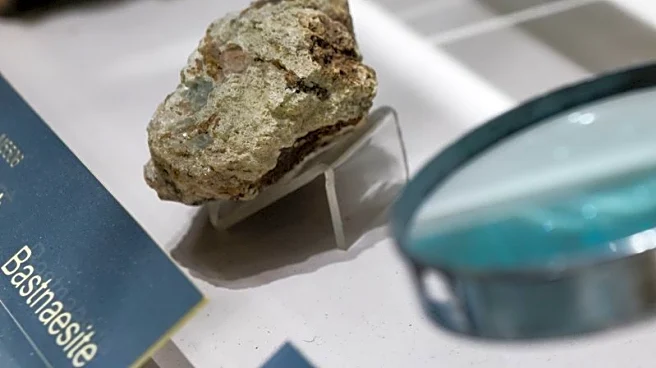
Rudd's early departure highlights the diplomatic challenges that can arise from personal and political disagreements at the international level. His resignation may impact Australia's diplomatic strategy and its efforts to strengthen ties with the U.S., particularly in areas such as trade and critical minerals cooperation. The transition in leadership could also influence ongoing and future negotiations between the two countries. Rudd's new role at the Asia Society may allow him to continue influencing U.S.-Australia relations from a different platform, potentially shaping policy discussions in the Asia-Pacific region.
What's Next?
Australia will need to appoint a new ambassador to the U.S. who can navigate the complexities of the bilateral relationship and address any lingering tensions. The new ambassador will play a crucial role in advancing Australia's interests in the U.S., particularly in light of evolving geopolitical dynamics. The appointment process and the subsequent transition will be closely watched by both domestic and international stakeholders, as it could signal shifts in Australia's diplomatic priorities and strategies.