

What's Happening?
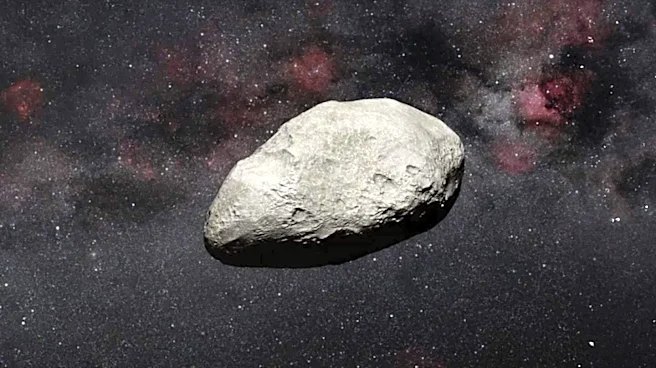
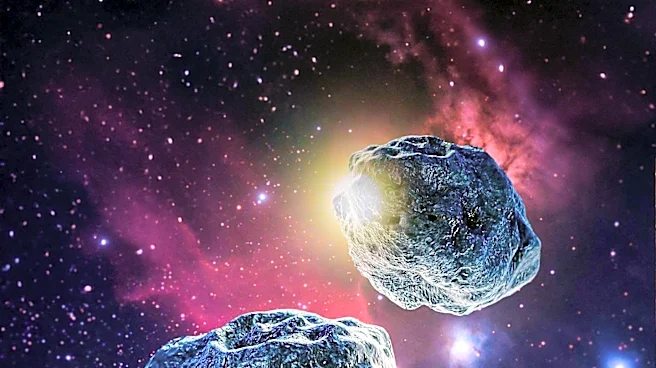
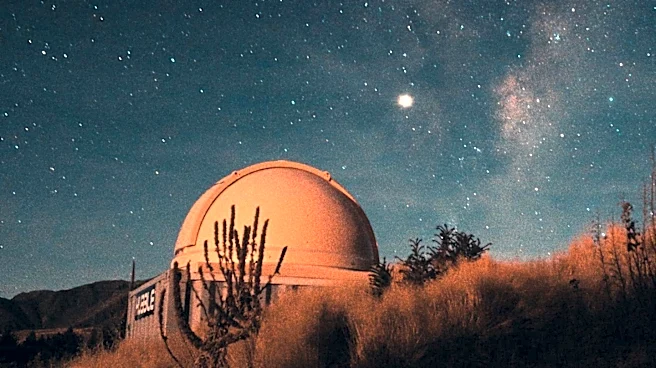
Recent investigations have revealed that asteroid 44 Nysa, initially discovered in the mid-19th century, is composed of three distinct lobes. This discovery was made using data from the Large Binocular Telescope in Arizona and the Very Large Telescope in Chile.
The asteroid, which measures approximately 113 x 67 x 65 km, is believed to have formed from three blocks that gradually fused together. Scientists are exploring the possibility that these blocks are fragments of a larger celestial body that experienced a significant collision, leading to their eventual reassembly.
Why It's Important?
The discovery of Nysa's three-lobed structure provides new insights into the formation and evolution of asteroids. Understanding the processes that lead to the formation of such complex structures can help scientists learn more about the history of our solar system. The findings also raise questions about the likelihood of similar formations existing elsewhere in space, potentially leading to further research and exploration. Additionally, studying asteroids like Nysa can offer valuable information about the materials and conditions present in the early solar system.