



What's Happening?
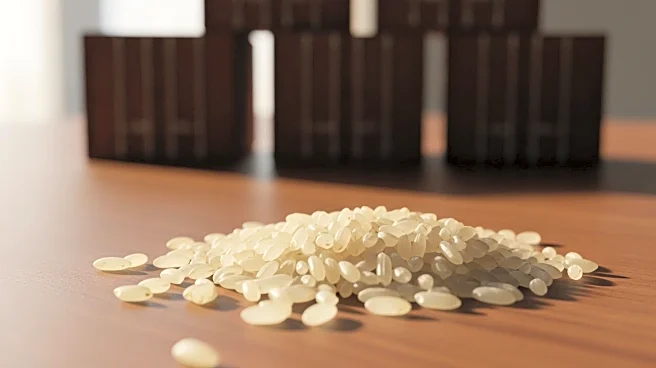
Reports indicate that President Donald Trump is considering imposing new tariffs on Indian rice, which has led to a significant drop in the stock prices of major Indian rice exporters. Companies like LT Foods, GRM Overseas, and Kohinoor Foods have seen
their shares fall by as much as 7.6% following the news. The U.S. is a major market for these exporters, and the potential tariffs come amid Trump's announcement of a $12 billion aid package for American farmers. This aid is intended to help farmers cope with increased costs for seeds and fertilizers, which have been exacerbated by existing trade tensions.
Why It's Important?
The potential tariffs on Indian rice could have a substantial impact on both the U.S. and Indian economies. For American farmers, the tariffs could provide a competitive edge by making imported rice more expensive, thereby boosting domestic sales. However, for Indian exporters, the tariffs could lead to reduced market access and financial losses, affecting their profitability and market share. This development is part of a broader pattern of trade protectionism that has characterized Trump's foreign policy, which aims to support American industries but often leads to international trade disputes.
What's Next?
If the tariffs are implemented, Indian rice exporters may seek to negotiate with the U.S. government or explore alternative markets to mitigate the impact. The situation could also prompt diplomatic discussions between the U.S. and India to address trade imbalances and seek a resolution. Additionally, American farmers and agricultural stakeholders will likely monitor the situation closely, as the tariffs could influence domestic market dynamics and pricing.