
What's Happening?
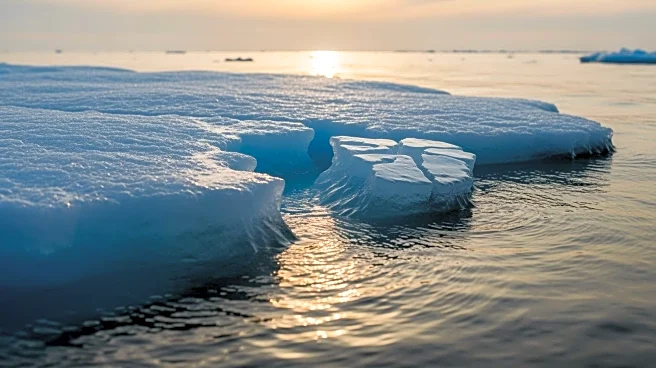
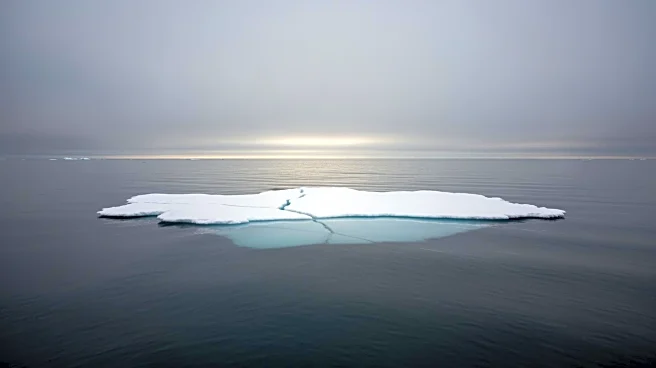
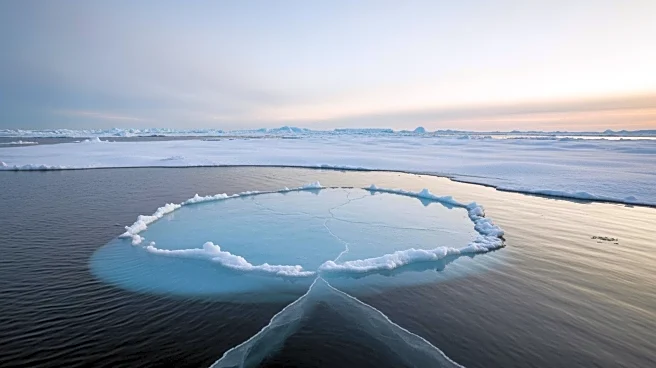
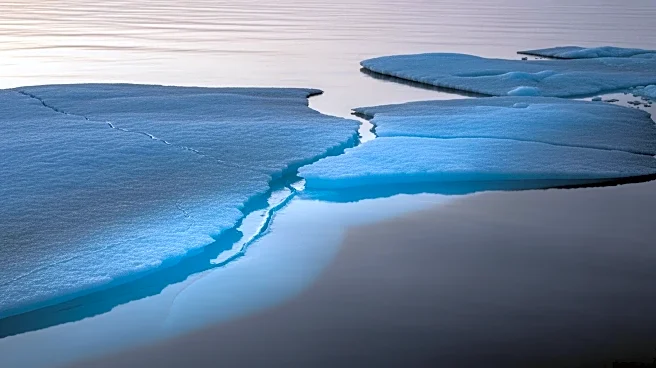
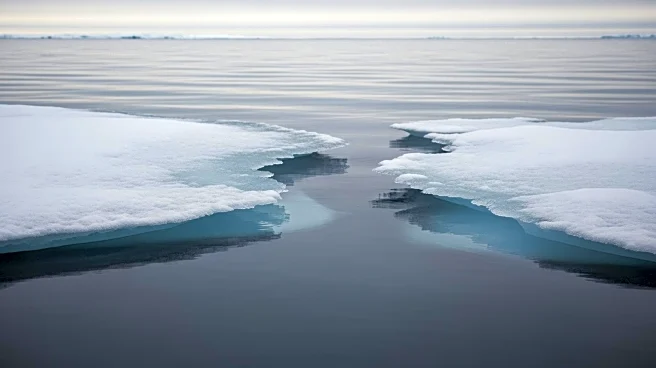
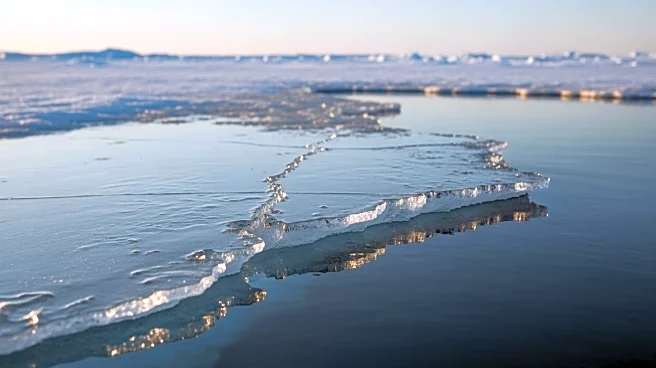
Arctic sea ice has reached its lowest winter level on record, continuing a trend of declining ice coverage observed over recent decades. This development coincides with record-breaking temperatures across the globe, including in the United States, Mexico,
and parts of Europe and Africa. The National Snow and Ice Data Center reported that the peak ice coverage this winter was 5.52 million square miles, slightly below last year's record low. The reduction in sea ice is attributed to rising global temperatures, which have been linked to climate change.
Why It's Important?
The decline in Arctic sea ice is a critical indicator of climate change, with significant implications for global weather patterns and ecosystems. Sea ice plays a vital role in reflecting sunlight, and its reduction leads to increased ocean heat absorption, further accelerating warming. This can disrupt weather systems, potentially leading to more extreme weather events. The loss of ice also impacts Arctic wildlife, such as polar bears and seals, which depend on ice for survival. Additionally, the opening of new shipping routes due to melting ice has geopolitical and economic implications.
What's Next?
As the Arctic enters the summer melt season, scientists will closely monitor ice levels to assess the potential for further record lows. The continued decline in sea ice may prompt increased international focus on climate policies and efforts to mitigate global warming. Researchers will also study the impacts on Arctic ecosystems and the potential for changes in global weather patterns. The situation underscores the urgency of addressing climate change through international cooperation and sustainable practices.
Beyond the Headlines
The ongoing reduction in Arctic sea ice highlights the complex interplay between climate change and global systems. It raises ethical questions about the responsibility of nations to address environmental impacts and protect vulnerable ecosystems. The situation also emphasizes the need for innovative solutions to reduce carbon emissions and transition to renewable energy sources. As the Arctic environment changes, there may be long-term shifts in global trade routes and economic activities, necessitating adaptive strategies from governments and industries.