



What's Happening?
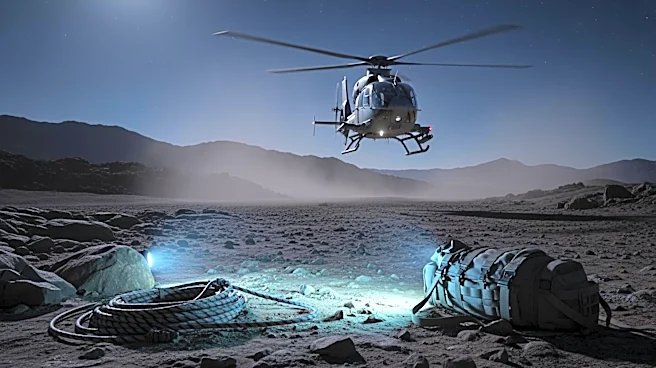
The U.S. military successfully executed a rescue operation to retrieve a stranded airman from deep within Iran, an action praised by President Trump as a significant military achievement. The operation involved elite forces, but many details remain undisclosed.
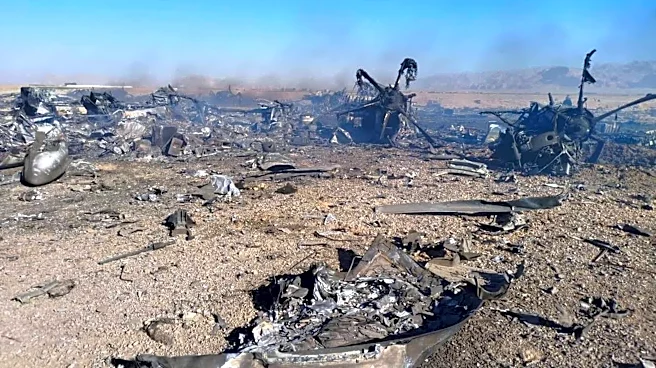
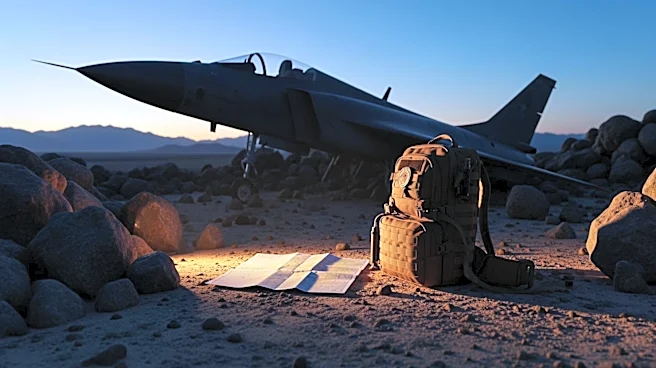
The Pentagon confirmed that both crew members from the downed F-15E are alive, with one injured but expected to recover. However, specifics about the mission, including the number of aircraft involved and the extent of damage, have not been fully disclosed. Reports suggest that U.S. special forces destroyed two transport aircraft on the ground in Iran due to technical malfunctions. Iranian media claims that two Blackhawk helicopters and two transport aircraft were lost, though these reports are unverified. The identities of the airmen and the exact nature of the injuries sustained remain confidential.
Why It's Important?
This rescue operation underscores the ongoing tensions between the U.S. and Iran, highlighting the potential for military escalation in the region. The successful extraction of the airman demonstrates the U.S. military's capability to conduct complex operations under challenging circumstances. However, the lack of transparency regarding the mission's details raises questions about the potential for further military engagements. The incident could impact U.S.-Iran relations, influencing diplomatic and military strategies. The operation's success may bolster U.S. military morale and public perception, but it also risks escalating tensions, potentially affecting regional stability and international relations.
What's Next?
The future of U.S. military operations in the region remains uncertain, as the White House and Pentagon have not ruled out further actions related to the incident. The situation is fluid, with potential for additional military engagements depending on developments in U.S.-Iran relations. Stakeholders, including political leaders and military officials, will likely assess the operation's implications for future strategies. The international community may also respond, with potential diplomatic efforts to address the underlying tensions. Monitoring the situation closely will be crucial for understanding the broader impact on regional and global security dynamics.