
What's Happening?
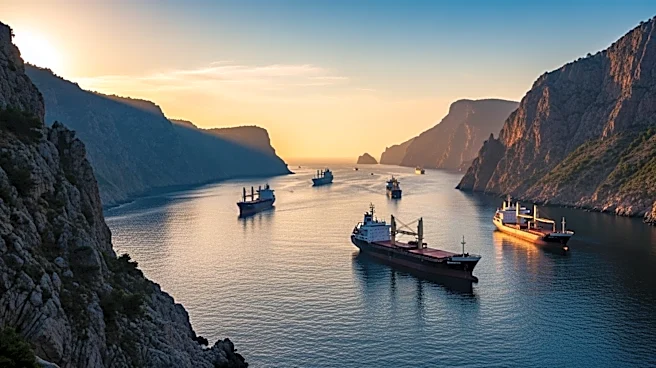
A group of 14 Senate Democrats is urging the Trump administration to reinstate sanctions on Russian oil. This call comes after a temporary waiver was issued due to disruptions in the Strait of Hormuz,
which affected global oil supply. The waiver, initially set to expire on April 11, has been extended to May 16. Senators argue that the waiver allows Russia to gain significant revenue, estimated at $150 million per day, amidst already high oil prices. The administration has defended the waiver as a necessary step to stabilize supply and manage price spikes.
Why It's Important?
The decision to reinstate sanctions on Russian oil is crucial for U.S. foreign policy and economic interests. Sanctions are a tool to exert pressure on Russia, particularly in the context of geopolitical tensions. The waiver's extension has economic implications, as it affects global oil prices and U.S. gasoline costs. Reinstating sanctions could lead to higher oil prices, impacting consumers and industries reliant on oil. The decision also reflects broader U.S. strategies in managing international relations and economic stability.
What's Next?
As the waiver's expiration approaches, political pressure is likely to increase. The administration may face decisions on whether to extend the waiver further or reinstate sanctions. Stakeholders, including oil companies and international partners, will be watching closely. The outcome could influence global oil markets and U.S. diplomatic relations. Future policy decisions will need to balance economic impacts with geopolitical strategies.