



What's Happening?
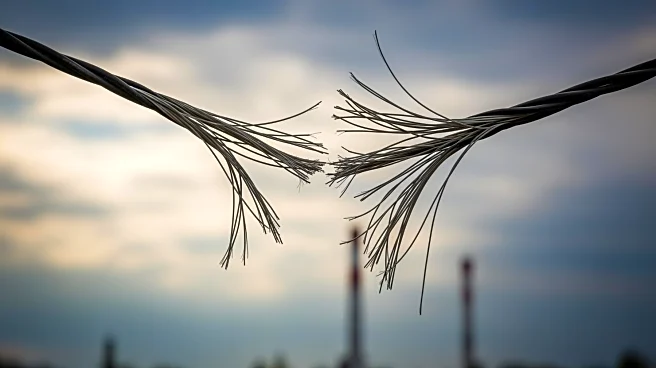
NJ Transit and Amtrak services experienced significant disruptions on Monday due to downed overhead wires near Newark, affecting train travel into and out of New York Penn Station. The issues began early in the morning, causing NJ Transit to suspend service on its
Northeast Corridor Line between Trenton and the station for approximately two hours. The North Jersey Coast Line also faced temporary suspensions. Although service resumed with delays by late morning, the disruptions continued to impact commuters throughout the day. Amtrak reported similar issues, with trains between Philadelphia and New York delayed by up to 60 minutes. The problems were attributed to infrastructure issues with the catenary wires, which disabled trains and forced passengers to seek alternative transportation. NJ Transit and Amtrak have apologized for the inconvenience and are working to restore full service.
Why It's Important?
The disruptions highlight the vulnerability of the aging infrastructure that supports critical transit routes in the Northeast Corridor, a vital link for commuters and travelers between major cities. The delays underscore the need for investment in infrastructure improvements to prevent such incidents, which can have significant economic and social impacts. Commuters rely heavily on these services for daily travel, and disruptions can lead to lost productivity and increased stress. The incident also brings attention to ongoing discussions about infrastructure funding and the importance of projects like the Gateway Tunnel, which aims to enhance regional rail service and prevent future disruptions.
What's Next?
NJ Transit and Amtrak are focused on resolving the current issues and restoring full service as quickly as possible. Commuters are advised to check for updates on service status through official channels. The incident may prompt renewed discussions among policymakers and stakeholders about the necessity of infrastructure investments, particularly in the context of the Gateway Tunnel project. This project, which has faced legal and funding challenges, is seen as crucial for improving the reliability and capacity of the region's rail network. The situation may also lead to increased advocacy for federal and state support to address infrastructure deficiencies.