
What's Happening?
Transportation Secretary Sean Duffy announced a significant crackdown on commercial driver's licensing (CDL) schools, resulting in the shutdown of 270 institutions. This action targets schools found to
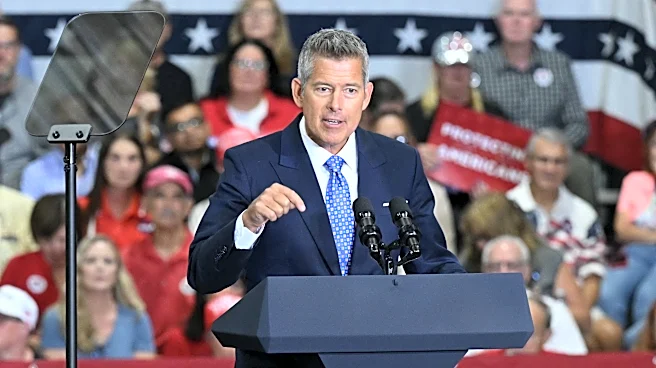
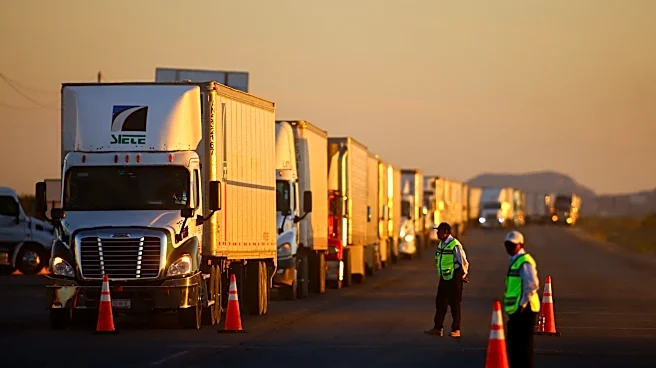
be fraudulently issuing licenses, particularly to individuals who cannot speak English or who received subpar training. Specifically, 110 schools were ordered to cease operations immediately for graduating approximately 5,000 enrollees who were later found to lack English proficiency. An additional 160 schools were suspended for failing to meet training facility standards, such as inadequate space or unlicensed instructors. The crackdown, announced in Detroit alongside Homeland Security Secretary Markwayne Mullin and federal prosecutors, is part of a broader effort by the Trump administration to enhance road safety and combat fraud within the trucking industry. Officials cited that 239 people have died in crashes caused by non-English speaking truck drivers since January 2025, with California being a significant source of licenses for operators involved in these incidents. The Federal Motor Carrier Safety Administration chief, Derek Barrs, highlighted specific examples of schools passing drivers who subsequently caused fatal accidents due to English language proficiency violations.
Why It's Important?
This crackdown is critical for public safety on U.S. roadways. The presence of commercial truck drivers who lack English proficiency or adequate training poses a significant risk, as evidenced by the reported fatalities and injuries. Commercial driver's licenses allow individuals to operate large vehicles across state lines, making national standards and rigorous enforcement essential. The integrity of the CDL issuance process directly impacts the safety of all motorists. By targeting fraudulent schools, the administration aims to ensure that only qualified and proficient drivers are operating commercial vehicles, thereby reducing accidents and saving lives. The initiative also addresses concerns about the exploitation of loopholes in the system, where some schools allegedly self-certified without meeting federal standards. This action underscores the federal government's role in overseeing and enforcing national safety regulations, even when states are responsible for issuing licenses. The involvement of Homeland Security also suggests a link to broader immigration enforcement, as officials noted that many illegal immigrants were granted CDLs under the previous administration, raising questions about the vetting process and potential national security implications.
What's Next?
The immediate consequence is the closure of 270 trucking schools, which will disrupt the training pipeline for new commercial drivers. Federal officials are also proposing to audit third-party agencies responsible for testing CDL applicants, indicating a broader review of the entire licensing ecosystem. The Department of Transportation plans to revoke the accreditation of nearly 3,000 trucking schools and trainers unless they meet federal requirements within 30 days, affecting over 40% of the nation's authorized training providers. This will likely lead to further closures or significant reforms within the industry. The administration will continue to prioritize investigations into employees suspected of accepting payments to help individuals bypass CDL requirements, including those at DMVs. This ongoing enforcement effort aims to root out corruption and ensure the integrity of the licensing process. While critics argue this is an immigration control measure, Secretary Duffy maintains the focus is on safety. The long-term impact could include a more stringent and standardized CDL training and licensing process nationwide, potentially leading to a safer trucking industry, though it may also affect the supply of new drivers.
Beyond the Headlines
Beyond the immediate safety concerns, this crackdown touches upon several deeper issues, including immigration policy, economic impacts on the trucking industry, and the balance of federal and state authority. The assertion that many illegal immigrants were granted CDLs and that some sanctuary cities are implicated in these practices adds a significant political dimension to the issue. This could fuel debates about immigration enforcement and the role of state versus federal laws. Economically, while the immediate effect might be a reduction in the number of available drivers, potentially exacerbating existing driver shortages, the long-term goal is to professionalize the industry and ensure a higher standard of competence. This could lead to increased wages for qualified drivers and a more stable, safer workforce. Ethically, the crackdown highlights the responsibility of educational institutions to uphold standards and the moral imperative to prevent fraudulent practices that endanger public lives. The focus on English proficiency also raises questions about language barriers in critical safety roles and the need for clear communication in a diverse workforce. This initiative could set a precedent for how federal agencies address safety and regulatory compliance in other industries with similar challenges.