

What's Happening?
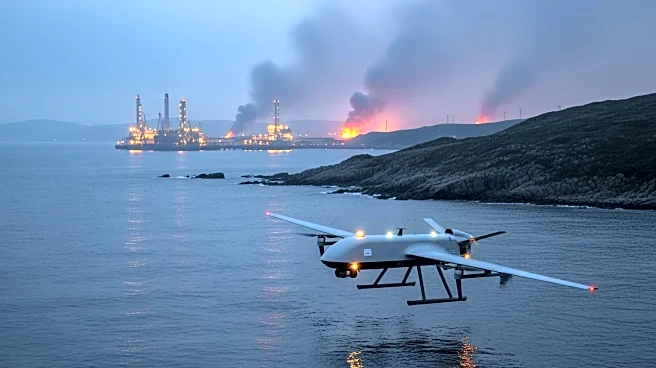
The ongoing conflict between Ukraine and Russia has prompted Western militaries to reassess their defense strategies, particularly the value of low-cost weaponry. The war has highlighted the effectiveness of cheaper weapons, such as drones, which allow
for mass deployment and the ability to absorb losses. Retired Air Marshal Greg Bagwell emphasized that the appeal of massed weaponry is not solely due to its cost-effectiveness but also its operational impact. The conflict has shown that while cheaper weapons may be less effective individually, their sheer volume can overwhelm enemy defenses. This has led to a shift in focus from smaller quantities of advanced systems to larger quantities of affordable weaponry. Troels Lund Poulsen, the Danish defense minister, noted that the West needs greater quantities of low-cost weapons to meet the demands of high-intensity warfare.
Why It's Important?
This shift in military strategy has significant implications for defense spending and procurement policies in Western countries. The emphasis on low-cost weaponry could lead to increased production and acquisition of such arms, impacting defense contractors and military budgets. The ability to deploy large quantities of affordable weapons may provide a strategic advantage in prolonged conflicts, allowing militaries to sustain operations without depleting resources. This reevaluation also reflects a broader trend towards adapting military strategies to contemporary warfare, where traditional high-cost, precision systems may not always be the most effective solution. The lessons learned from Ukraine's defense efforts could influence future military engagements and defense policies across the globe.
What's Next?
As Western militaries continue to adapt to the lessons learned from the Ukraine conflict, there may be increased collaboration among NATO allies to develop and produce low-cost weaponry. Defense contractors could see a shift in demand towards more affordable systems, prompting innovation in the design and production of such weapons. Additionally, military training and strategic planning may increasingly incorporate the use of massed, low-cost weaponry to prepare for potential large-scale conflicts. Policymakers will need to balance the need for cost-effective solutions with maintaining technological superiority in defense capabilities.