




What's Happening?
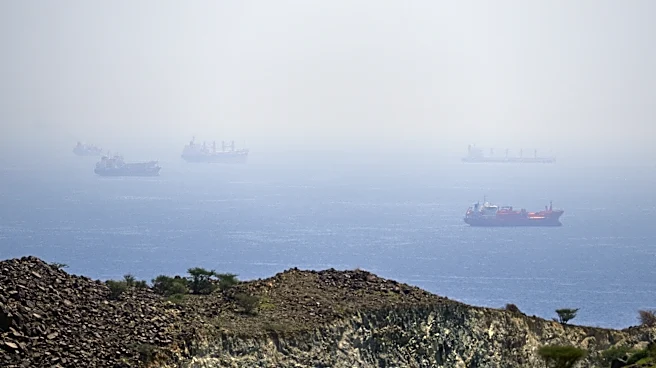
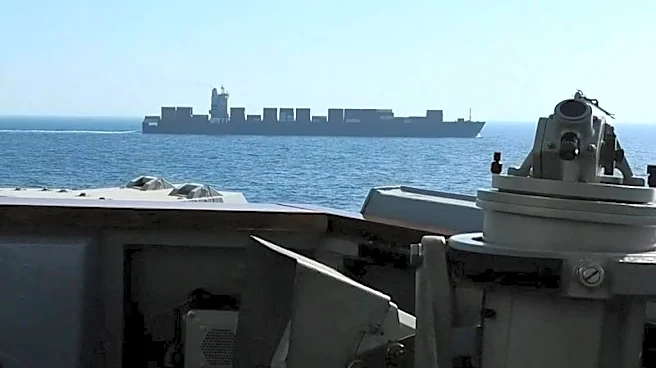
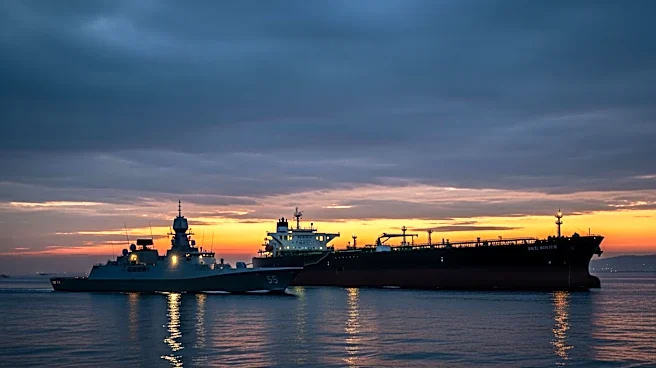
President Trump has announced that the U.S. Navy has struck and seized an Iranian tanker attempting to cross a U.S. blockade. This development comes at a time when the ceasefire between the U.S. and Iran is under threat. The White House has indicated
that negotiators, including Vice President JD Vance, are set to return to Pakistan for a new round of peace talks with Iran. This action by the U.S. Navy is part of ongoing tensions in the region, with the U.S. maintaining a firm stance against Iranian movements that are perceived as aggressive or in violation of international agreements.
Why It's Important?
The seizure of the Iranian tanker by the U.S. Navy is a significant escalation in the ongoing tensions between the U.S. and Iran. This action could potentially derail the fragile ceasefire and complicate diplomatic efforts aimed at de-escalating the situation. The involvement of high-level negotiators like Vice President JD Vance underscores the importance the U.S. places on resolving these tensions through diplomatic channels. However, the military action could provoke a strong response from Iran, potentially leading to further instability in the region. This situation is critical for U.S. foreign policy and could have broader implications for international relations and global oil markets.
What's Next?
Negotiators from the U.S., including Vice President JD Vance, are scheduled to return to Pakistan for further peace talks with Iran. The outcome of these talks will be crucial in determining the next steps in U.S.-Iran relations. The international community will be closely watching these developments, as any escalation could have significant geopolitical and economic consequences. The U.S. will likely continue to monitor Iranian activities closely and may take further military or diplomatic actions depending on Iran's response to the seizure.