
What's Happening?
President Trump recently claimed on Truth Social that Black voters are increasingly supporting the Republican Party, rejecting the Democratic Party's 'communism and socialism.' However, historical voting
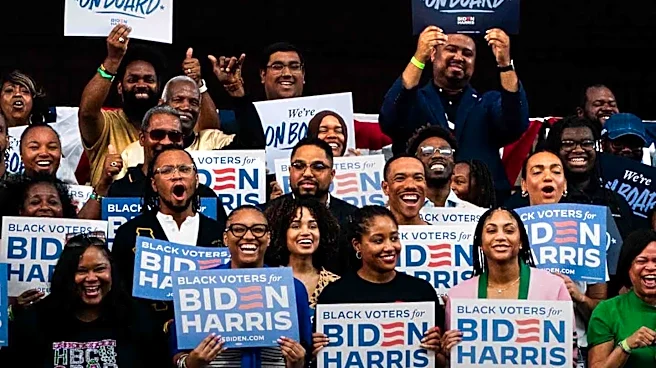
patterns and recent polls contradict this assertion. Black voters have consistently supported the Democratic Party, with 80-90% voting for Democratic presidential nominees since the 1960s. In the 2024 election, 83% of Black voters opposed Trump, favoring former Vice President Kamala Harris. Current polling indicates that Black voters remain largely disapproving of Trump's performance and the Republican Party, with 78% disapproving of Trump and 68% holding unfavorable views of Republicans in Congress.
Why It's Important?
Trump's claims about Black voter support are significant as they highlight ongoing efforts by Republicans to appeal to minority voters, a demographic traditionally aligned with Democrats. The accuracy of these claims is crucial, as Black voters play a pivotal role in determining election outcomes, particularly in swing states. Misrepresenting voter sentiment could influence campaign strategies and voter turnout. Additionally, the narrative around Black voter support for Republicans could impact public perception and political discourse, potentially affecting future policy decisions and party platforms.
What's Next?
As the midterm elections approach, both parties will likely intensify their outreach efforts to Black voters. Democrats may focus on reinforcing their historical support among Black communities, while Republicans might attempt to capitalize on any perceived shifts in voter sentiment. The outcome of these efforts could influence the balance of power in Congress and shape the political landscape leading up to the 2028 presidential election. Observers will be watching for any changes in voter registration and turnout patterns, as well as shifts in party messaging and policy proposals aimed at addressing the concerns of Black voters.