



What's Happening?
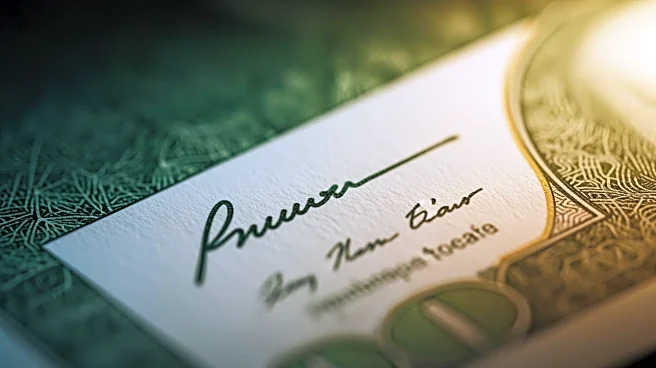
The U.S. Treasury Department has announced a significant change in the design of U.S. paper currency. For the first time in American history, the signature of a sitting president, President Donald Trump, will appear on all new paper currency. This decision
marks the end of a 165-year tradition where the U.S. Treasurer's signature was featured on the bills. The change is part of the celebrations for the upcoming 250th anniversary of the United States. The first $100 bills with President Trump's signature are expected to be printed in June, with other denominations to follow. The overall design of the bills will remain unchanged, with only the signature being replaced.
Why It's Important?
This development is significant as it represents a departure from a long-standing tradition in U.S. currency design. The inclusion of President Trump's signature on the currency is seen as a symbolic gesture to commemorate the nation's 250th anniversary. It also highlights the broad authority of the Treasury Secretary over currency design, as noted by experts. The move could have implications for the perception of U.S. currency both domestically and internationally, potentially turning these bills into collectors' items. It also reflects the administration's desire to leave a lasting legacy on the nation's financial instruments.
What's Next?
The introduction of the new currency with President Trump's signature is expected to begin in June with the $100 bills, followed by other denominations. This change may prompt discussions and reactions from various stakeholders, including political leaders, historians, and the public. The Treasury Department's decision could lead to debates about the appropriateness of such a change and its impact on the tradition of U.S. currency design. Additionally, the new bills may attract interest from collectors and the general public, potentially influencing their circulation and value.