



What's Happening?
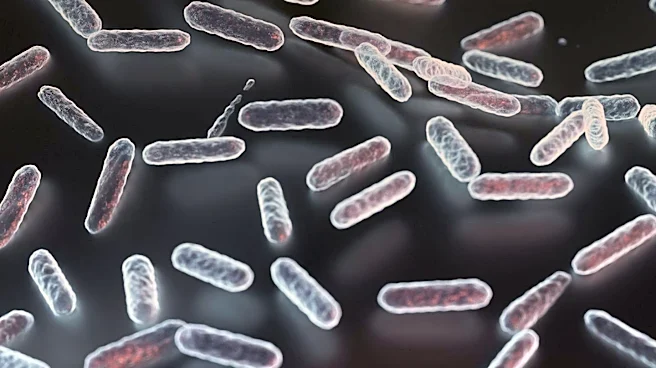
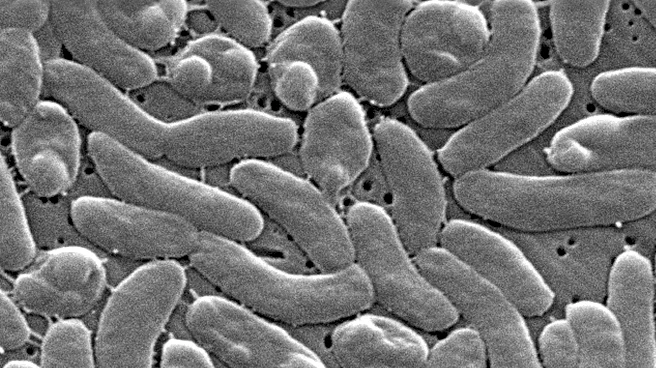
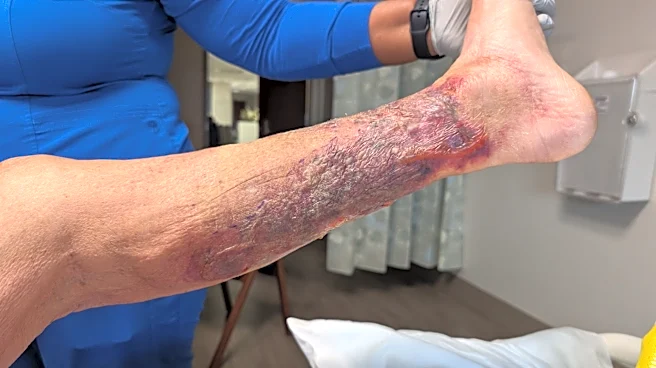
Health authorities in Louisiana have issued an urgent alert following a significant increase in infections caused by the Vibrio vulnificus bacteria, commonly known as the 'flesh-eating bacteria'. This pathogen, which naturally occurs in warm coastal waters,
has resulted in five fatalities in Louisiana this year. The Louisiana Department of Health confirmed nine cases of infection, all requiring hospitalization, with five resulting in death. This marks a stark increase compared to the previous decade's average of seven cases and one death annually. The rise in cases has prompted authorities to urge the public to take extreme precautions, especially when exposed to brackish or saltwater with open wounds, or when consuming raw or undercooked shellfish.
Why It's Important?
The outbreak of Vibrio vulnificus in Louisiana highlights the growing public health challenge posed by climate change, which is believed to be contributing to the spread of such bacteria. The increase in water temperatures creates favorable conditions for the bacteria to thrive, potentially leading to more frequent and severe outbreaks. This situation poses a significant risk to public health, particularly for individuals with pre-existing health conditions or weakened immune systems. The economic impact is also notable, as it could affect the seafood industry and tourism in coastal areas, where the bacteria are most prevalent.
What's Next?
Health authorities are likely to continue monitoring the situation closely and may implement additional public health measures to prevent further infections. Public awareness campaigns could be intensified to educate the population on the risks and preventive measures. The situation may also prompt further research into the effects of climate change on the spread of infectious diseases, potentially influencing future public health policies and resource allocation.