
What's Happening?
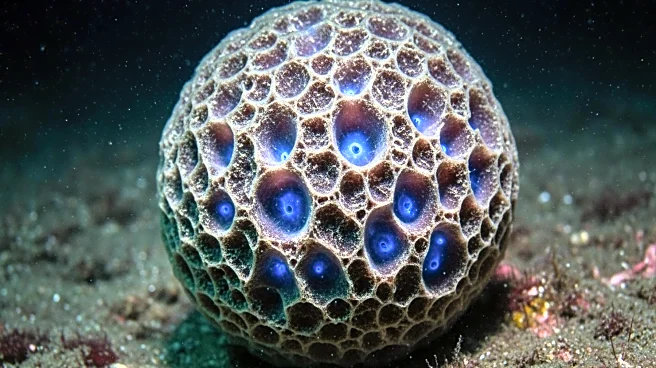
A recent expedition by the Nippon Foundation–Nekton Ocean Census has uncovered 30 new species in the deep sea near Antarctica, including a carnivorous sponge known as the 'death-ball' sponge. These sponges,
part of the Chondrocladia genus, capture small prey with tiny hooks. The expedition also discovered new species of scale worms, crustaceans, and sea stars. The findings underscore the vast, undocumented biodiversity in the Southern Ocean, with only 30 percent of collected samples analyzed so far.
Why It's Important?
The discovery of these new species highlights the rich and largely unexplored biodiversity of the Southern Ocean. This region remains profoundly under-sampled, and the findings could have significant implications for our understanding of marine ecosystems and biodiversity. The data collected from this expedition will contribute to an open-access platform, aiding future research and conservation efforts. Understanding these ecosystems is crucial for assessing the impacts of climate change and human activities on marine life.
What's Next?
The analysis of the remaining samples from the expedition is ongoing, with the potential to uncover even more new species. The data will be curated in an open-access platform, facilitating further research and collaboration among scientists. Continued exploration and documentation of the Southern Ocean's biodiversity are essential for informing conservation strategies and understanding the ecological dynamics of this remote region.