







What's Happening?
A recent report from the U.S. Department of Labor's Employment Cost Index reveals that despite receiving higher paychecks, Americans effectively have less purchasing power due to persistent inflation. The report, covering the 12 months ending in September,
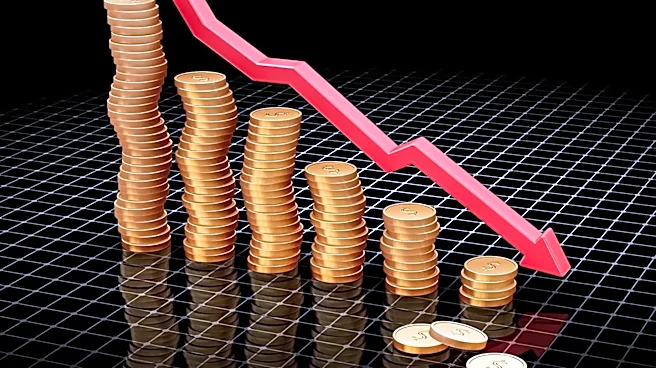
shows that total compensation for civilian workers, including wages and benefits, increased by 3.4%. Wages and salaries alone rose by 3.1%, while benefit costs climbed by 3.9%. However, after adjusting for inflation, real wages for private-sector workers fell by 0.6%, and for state and local government workers, they slipped by 0.5%. This indicates that the rate of price increases for goods and services, such as clothing, housing, and gas, is outpacing wage gains, leading to a reduction in workers' actual spending capacity.
Why It's Important?
This report highlights a critical economic challenge for American households, as their earnings are not keeping pace with the rising cost of living. The erosion of purchasing power can lead to financial stress, reduced savings, and a lower quality of life for many families. For the Federal Reserve, these findings present a dilemma: how to curb inflation without triggering a significant slowdown in hiring or wage growth. The Employment Cost Index is a closely watched indicator by the Federal Reserve, as it provides insights into underlying wage and benefit pressures within the economy. The data suggests that previous efforts to tame inflation, such as interest rate hikes, have not yet fully translated into stable real wage growth, complicating future monetary policy decisions.
What's Next?
The Federal Reserve will likely continue to monitor inflation and wage data closely as it considers future monetary policy adjustments. The report's implications could influence decisions regarding interest rates, as the central bank aims to achieve price stability without stifling economic growth. American households may need to adjust their spending and saving habits to cope with the ongoing disparity between nominal wage increases and real purchasing power. Businesses might face continued pressure to raise wages to attract and retain talent, potentially contributing to a wage-price spiral if not managed effectively. The economic landscape will remain dynamic, with inflation and real wage trends being key factors in consumer confidence and overall economic stability.
Beyond the Headlines
The phenomenon of shrinking real wages despite nominal pay raises points to a deeper structural issue within the economy, where supply chain disruptions, geopolitical events, and robust consumer demand collectively contribute to inflationary pressures. This situation can exacerbate wealth inequality, as those with fewer assets or lower incomes are disproportionately affected by rising prices. The report also raises questions about the effectiveness of current economic policies in protecting the financial well-being of the average American worker. Understanding the long-term implications of sustained real wage declines is crucial for policymakers to develop comprehensive strategies that address both inflation and the cost of living, ensuring a more equitable and stable economic future.