
What's Happening?
A recent study conducted by scientists from the Natural History Museum, the UK National Oceanography Centre, and the University of Gothenburg has revealed that deep-sea mining operations significantly
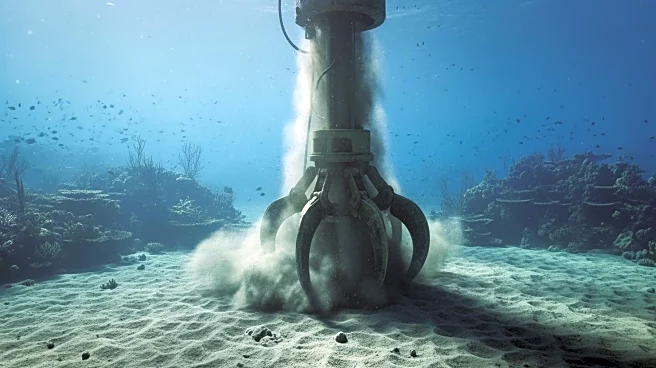
impact seabed biodiversity. The research, commissioned by The Metals Company, found that the number of animals in the tracks of mining vehicles decreased by 37%, and species diversity fell by 32%. The study focused on a remote area of the Pacific Ocean known as the Clarion-Clipperton Zone, which is rich in critical minerals needed for green technologies. Despite the potential benefits of these minerals, the environmental impact of mining operations remains a major concern. The study highlights the need for more research to understand the full extent of the damage caused by deep-sea mining.
Why It's Important?
The findings of this study are significant as they underscore the environmental risks associated with deep-sea mining, a practice that could potentially supply essential minerals for renewable energy technologies. The decline in biodiversity poses a threat to ocean ecosystems, which play a crucial role in regulating the planet's climate. The study's results could influence future policy decisions regarding the approval and regulation of deep-sea mining operations. Environmental groups and scientists are likely to use this data to advocate for stricter regulations and more comprehensive environmental assessments before any large-scale mining is permitted.
What's Next?
The study's findings may prompt regulatory bodies to reconsider the approval of deep-sea mining projects. There could be increased pressure on companies and governments to invest in alternative methods of mineral extraction that are less harmful to marine ecosystems. Additionally, further research is likely to be conducted to explore the long-term impacts of deep-sea mining and to develop strategies for mitigating its environmental effects. Stakeholders, including environmental organizations and policymakers, will need to balance the demand for critical minerals with the need to protect ocean biodiversity.