
What's Happening?
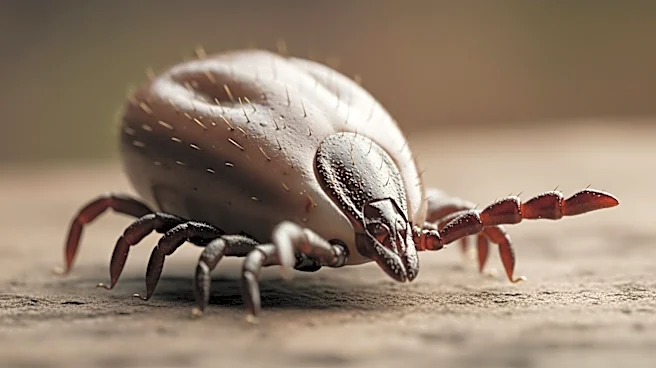
The Asian longhorned tick, an invasive species known for its ability to clone itself, poses a significant threat to the U.S. livestock industry. This tick, originally from Asia, has spread across at least
21 states in the U.S. since its first detection in New Jersey. Its parthenogenetic reproduction allows it to multiply rapidly without mating, leading to large infestations that can severely impact cattle. The tick transmits theileriosis, a disease that causes anemia and other health issues in cattle, complicating management efforts. Despite attempts to control its spread, the tick has established itself firmly in the U.S., raising concerns among agricultural and health officials.
Why It's Important?
The spread of the Asian longhorned tick is a major concern for the U.S. livestock industry due to its potential to cause significant economic losses. The tick's ability to reproduce asexually means it can quickly overwhelm cattle populations, leading to increased veterinary costs and potential loss of livestock. Theileriosis, the disease it spreads, can severely affect cattle health, reducing productivity and increasing mortality rates, particularly in younger animals. This situation poses a threat to farmers' livelihoods and could impact the broader agricultural economy. The National Cattlemen’s Beef Association is advocating for federal support to establish a surveillance network to monitor and control the tick's spread.
What's Next?
Efforts to manage the Asian longhorned tick's spread are ongoing, with the National Cattlemen’s Beef Association planning to seek congressional funding for a surveillance network. This network would help track the tick's distribution and implement control measures more effectively. In the meantime, farmers and agricultural officials are urged to remain vigilant and adopt preventive measures to protect livestock. The tick's adaptability to various climates suggests that it could continue to spread, necessitating coordinated efforts at local, state, and federal levels to mitigate its impact on the livestock industry.