


What's Happening?
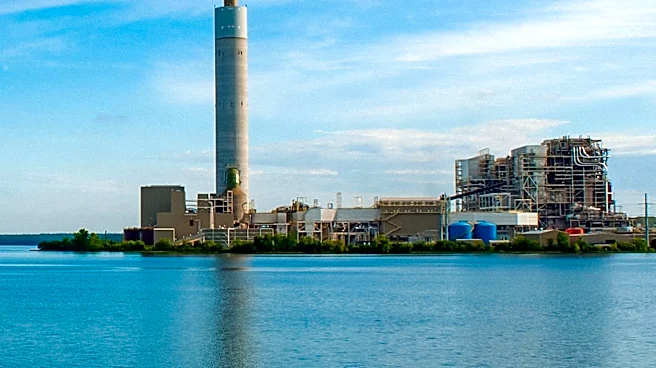
Residents in Howard County, Maryland, specifically in the Cedar Creek and River Hill communities, are demanding transparency regarding emissions from a W.R. Grace plastic recycling pilot plant. The multinational chemical company initiated its pilot program
in 2023, and despite meeting state and federal permitting requirements, residents have reported foul odors emanating from the facility. The Maryland Department of the Environment (MDE) granted the necessary air permit, requiring the company to control and monitor for volatile organic compounds and 'forever chemicals,' but an environmental impact assessment was not mandated for the pilot project. W.R. Grace claims some information about its process is proprietary, limiting public access to details about its operations and emissions. Community organizer Shamieka Preston, who lives near the facility, has been actively involved in the Stop Grace Coalition, advocating for accountability. The company states its new recycling method reduces emissions, saves energy, and lowers costs compared to other options like pyrolysis, and asserts the pilot project will not impact community health.
Why It's Important?
This situation highlights a growing concern across the U.S. regarding the environmental and public health impacts of advanced chemical recycling facilities, particularly when information about their operations is withheld due to proprietary claims. The lack of transparency from W.R. Grace, coupled with the MDE's decision not to require an environmental impact assessment for a pilot project, raises questions about regulatory oversight and community protection. Environmental advocates, such as Rita O’Connell from Beyond Plastics, caution that chemical recycling is often presented as a solution to the climate crisis but may serve as a public relations tool for the plastics and petrochemical industries, allowing them to continue high levels of plastic production. The incident in Maryland underscores the challenges communities face in understanding and mitigating potential risks from industrial operations, especially when new technologies are being tested. The broader implications include the potential for similar issues in other states, as federal guidance on pyrolysis and chemical recycling remains limited, leaving state agencies with significant discretion.
What's Next?
Residents of Howard County are expected to continue their efforts to obtain more information and push for greater accountability from W.R. Grace and regulatory bodies. The Stop Grace Coalition, led by community organizers like Shamieka Preston, will likely persist in their advocacy, potentially exploring further legal or political avenues to address their concerns. The ongoing reports of foul odors could prompt further investigation by the MDE or increased public pressure for more stringent monitoring and disclosure requirements. Given the experimental nature of pilot plants, as noted by former EPA official Scott Throwe, there is an inherent risk of unforeseen issues, which could lead to calls for more comprehensive risk assessments and industry-specific regulations for chemical recycling processes. The outcome in Maryland could influence how similar projects are permitted and monitored in other U.S. states, potentially leading to increased scrutiny of advanced chemical recycling technologies nationwide.
Beyond the Headlines
The situation in Maryland delves into the complex interplay between industrial innovation, environmental regulation, and community rights. The claim of proprietary information by W.R. Grace raises ethical questions about corporate transparency versus public health and safety, particularly when experimental technologies are involved. The broader context reveals a national debate on the efficacy and environmental impact of chemical recycling as a solution to plastic pollution. Critics argue that such processes, often promoted by the Biden administration as part of efforts to reduce greenhouse gas emissions, may not be as environmentally friendly as portrayed and could perpetuate reliance on fossil fuels. The lack of robust federal guidance on pyrolysis means that states are largely left to their own devices, potentially leading to inconsistent regulatory standards and varying levels of protection for communities. This case highlights the need for a re-evaluation of how new industrial processes are assessed, permitted, and monitored, ensuring that public health and environmental protection are prioritized alongside economic and technological advancements.