



What's Happening?
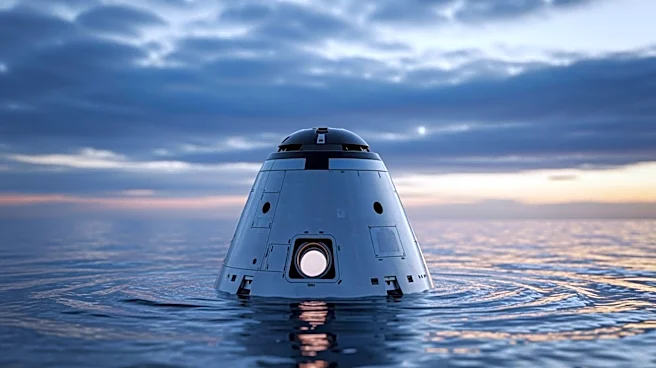
NASA's Artemis II mission, the first crewed mission to the moon since the Apollo program, is preparing for its return to Earth. The mission, which launched from Kennedy Space Center on April 1, 2026, is set to splash down off the Southern California coast
on April 10. Weather conditions are being closely monitored, as NASA has strict criteria for splashdown, including wind speeds below 25 knots and wave heights under 6 feet. Current forecasts are favorable, with manageable winds and waves, though there is a slight chance of showers. The mission has already achieved several milestones, including the first woman astronaut traveling close to the moon.
Why It's Important?
The successful completion of the Artemis II mission is a significant milestone for NASA's Artemis program, which aims to return humans to the moon and eventually to Mars. The mission's success could bolster public and governmental support for future space exploration initiatives. Additionally, the inclusion of a female astronaut highlights NASA's commitment to diversity and inclusion in space exploration. The mission's outcomes could influence future funding and policy decisions related to space exploration and international collaboration in space science.
What's Next?
Following the splashdown, NASA will conduct a thorough analysis of the mission's data to inform future Artemis missions. The success of Artemis II will pave the way for Artemis III, which aims to land astronauts on the lunar surface. NASA will continue to refine its technology and strategies for deep space exploration, with a focus on sustainability and international partnerships. The agency will also address any challenges encountered during Artemis II to ensure the safety and success of subsequent missions.