








What's Happening?
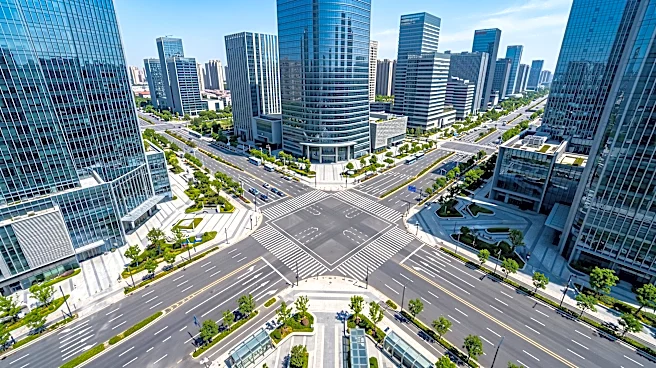
The Urban Toolkit (UrbanTK) has introduced a comprehensive open-source ecosystem designed to enhance urban visual analytics. This suite of tools, frameworks, and knowledge bases aims to simplify and accelerate the visualization and analysis of urban data.
UrbanTK provides researchers, experts, and developers with resources to explore complex urban phenomena through high-level visual grammars, map-centric interactions, and curated datasets. The ecosystem includes declarative grammars and toolkits for authoring urban visualizations, dataflow frameworks for collaborative visual analytics, and knowledge bases on designing and building urban visual analytics systems. Additionally, it incorporates machine learning capabilities for urban data at city scale, covering aspects from sunlight and shadows to sidewalk networks and 3D city visibility. The initiative is supported by organizations such as the National Science Foundation (NSF), the Discovery Partners Institute (DPI), and IDOT.
Why It's Important?
This development is significant for urban planning and research in the U.S. as it democratizes access to advanced urban data analysis tools. By providing open-source resources, UrbanTK can foster innovation and collaboration among various stakeholders, including academic institutions, government agencies, and private developers. Improved urban visual analytics can lead to more informed decision-making in areas such as infrastructure development, resource allocation, and environmental management. The ability to explore complex urban phenomena more effectively can help cities address challenges like traffic congestion, housing shortages, and climate change impacts. This initiative could also stimulate economic growth by enabling the creation of new urban tech solutions and supporting data-driven urban policies across U.S. cities.
What's Next?
The Urban Toolkit is expected to continue expanding its ecosystem, with ongoing development of new tools and frameworks. Future efforts will likely focus on integrating more advanced machine learning models for urban data processing and enhancing collaborative features within its dataflow frameworks. The project encourages community engagement through platforms like Discord and issue tracking in project repositories, suggesting a continuous feedback loop for improvements and new feature requests. Educational initiatives, such as tutorials on high-level grammars for visualization and visual analytics, will likely continue to be offered to broaden the user base and expertise. The sustained support from organizations like the NSF indicates a long-term commitment to advancing urban data science and its applications.
Beyond the Headlines
The emergence of open-source platforms like UrbanTK reflects a broader trend towards transparency and collaborative innovation in urban development. This approach challenges traditional proprietary software models by making sophisticated tools accessible to a wider audience, potentially leveling the playing field for smaller municipalities or research groups with limited budgets. Ethically, it promotes data-driven governance and planning, which can lead to more equitable and sustainable urban environments. Culturally, it fosters a community of practice around urban data science, encouraging knowledge sharing and collective problem-solving. The long-term implications include the potential for U.S. cities to become 'smarter' and more resilient, adapting to future challenges with greater agility and precision through enhanced analytical capabilities.