


What's Happening?
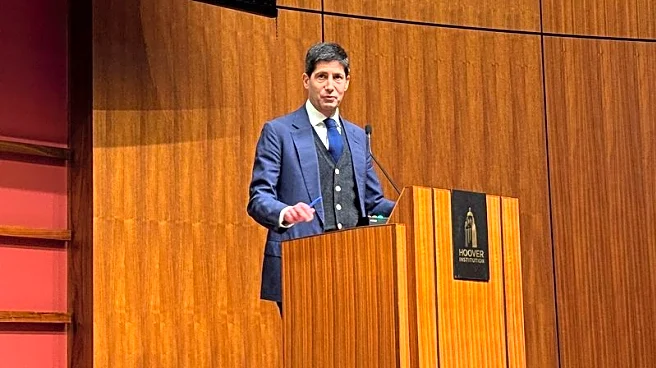
President Trump has nominated Kevin Warsh to replace Federal Reserve Chair Jerome Powell when Powell's term ends in May. This nomination comes at a time when President Trump is perceived to be attempting to influence the Federal Reserve's independence,
a move that could complicate Warsh's confirmation process. The Federal Reserve, traditionally an independent entity, is facing potential challenges as President Trump seeks to align its policies more closely with his economic agenda. Warsh, if confirmed, may face the task of reducing the Fed's balance sheet, which could lead to higher interest rates, potentially conflicting with the administration's economic goals.
Why It's Important?
The independence of the Federal Reserve is crucial for maintaining economic stability and investor confidence. President Trump's efforts to influence the Fed could lead to significant shifts in monetary policy, affecting interest rates and economic growth. If Warsh is confirmed and aligns with Trump's agenda, it could result in higher interest rates, impacting mortgage costs and consumer spending. This situation highlights the delicate balance between political influence and economic policy, with potential implications for the U.S. economy and global markets.
What's Next?
The confirmation process for Kevin Warsh will likely involve scrutiny from both political leaders and economic stakeholders. The Federal Open Market Committee and other policymakers may express concerns about maintaining the Fed's independence. The outcome of Warsh's confirmation could set a precedent for future interactions between the White House and the Federal Reserve, influencing how monetary policy is shaped in the coming years.