




What's Happening?
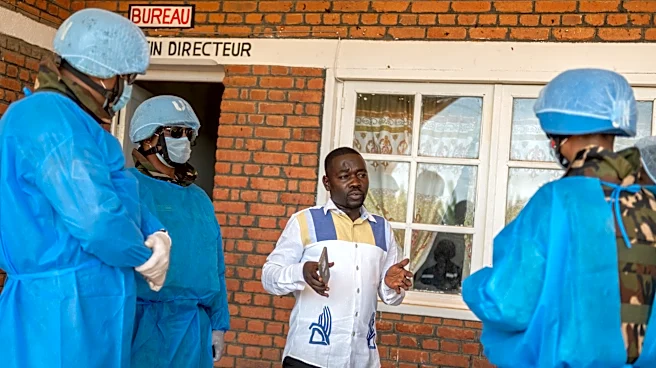
The Democratic Republic of Congo is experiencing a severe Ebola outbreak, with over 100 deaths reported out of 550 confirmed cases. The outbreak, which began in May 2026, is primarily concentrated in the eastern province of Ituri, with cases also reported in North
Kivu and South Kivu provinces. The situation is exacerbated by ongoing armed conflict and attacks on health workers, which hinder efforts to contain the virus. The outbreak is caused by the Bundibugyo virus, a rare strain of Ebola for which there is no approved vaccine or treatment. Efforts to control the outbreak are further complicated by skepticism among locals and logistical challenges in reaching affected areas.
Why It's Important?
The escalation of the Ebola outbreak in Congo poses significant public health challenges, not only for the region but potentially for global health security. The lack of an approved vaccine for the Bundibugyo strain increases the risk of further spread, especially in conflict zones where health interventions are difficult. The outbreak highlights the vulnerability of regions with weak health infrastructure and ongoing conflict, emphasizing the need for international support and cooperation. The situation also raises concerns about the potential for cross-border transmission, particularly to neighboring countries like Uganda, which has already reported cases.
What's Next?
Efforts to contain the outbreak will likely involve increased international support and coordination with local authorities to improve contact tracing and health interventions. The World Health Organization and other international bodies may need to intensify their presence in the region to provide necessary resources and expertise. Additionally, there may be a push for accelerated research into vaccines and treatments for the Bundibugyo strain. The ongoing conflict in the region will continue to pose challenges, requiring diplomatic efforts to ensure safe access for health workers.
Beyond the Headlines
The outbreak underscores the complex interplay between health crises and socio-political factors, such as conflict and public distrust. It highlights the need for a holistic approach to health emergencies that considers not only medical interventions but also community engagement and conflict resolution. The situation in Congo could serve as a case study for future responses to health crises in conflict zones, emphasizing the importance of integrating health strategies with peace-building efforts.