


What's Happening?
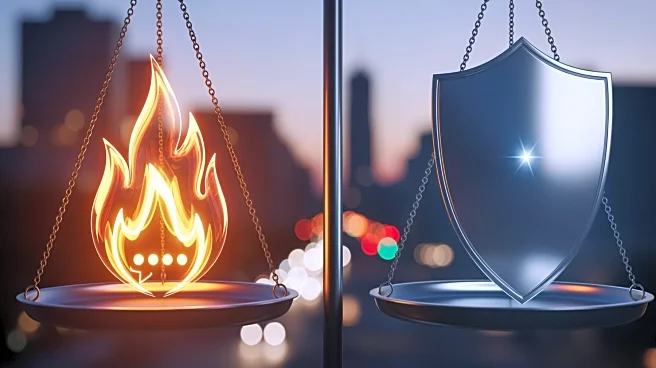
Recent legislative efforts in the United States have introduced new laws aimed at regulating protests, sparking significant debate over their implications for free speech and public safety. Florida, among other states, has enacted laws that impose severe
penalties on protesters, including jail time for blocking roadways. These laws have been criticized by First Amendment experts who argue they may infringe on constitutional rights. The legislation, often equating protests with riots, has led to concerns about selective enforcement and the potential chilling effect on public demonstrations.
Why It's Important?
The introduction of these laws represents a significant shift in how protests are managed in the U.S., potentially altering the landscape of civil disobedience and public demonstration. The laws could deter individuals from participating in protests due to fear of legal repercussions, thereby impacting the ability of citizens to express dissent and hold the government accountable. This development is particularly relevant in the context of ongoing social and political movements, where public demonstrations play a crucial role in advocating for change.
What's Next?
As these laws face legal challenges, the outcomes of court rulings will be pivotal in determining their future enforcement and impact. The U.S. Supreme Court may eventually weigh in on the constitutionality of these measures, setting a precedent for how protest-related laws are interpreted nationwide. Meanwhile, protest organizers are adapting by implementing strategies to mitigate legal risks, such as requiring RSVPs and keeping locations confidential until the last minute.